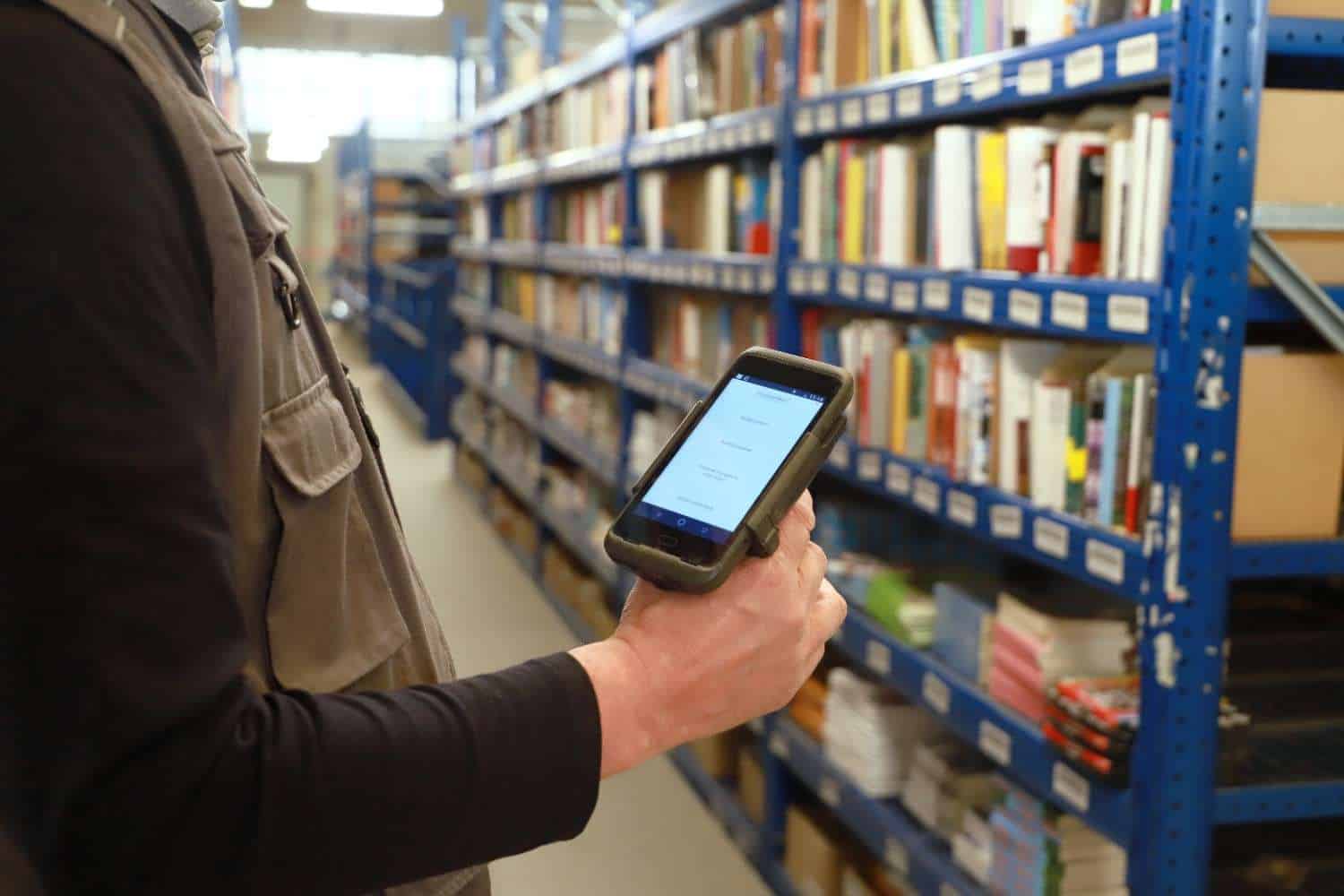
For many enterprise leaders, RFID raises an important question before it ever delivers value:
- Can RFID securely track high-value assets?
- Will it reduce operational risk—or introduce new vulnerabilities?
These concerns are valid. The tracking systems for critical inventory, expensive equipment, and regulated products function as more than operational tools because they serve as essential elements for your risk management approach.
People often misunderstand RFID technology because it serves as more than a tracking solution. The system provides control and visibility through proper implementation, which creates operational accountability. The real distinction lies in how RFID is deployed.
Industry data shows that RFID can increase inventory accuracy from around 63% to over 95%, giving organizations a much clearer and more reliable view of their assets.
A standalone setup may provide limited tracking. An integrated RFID system, which connects all hardware and software elements and business processes, enables complete supply chain tracking through its traceability functions.
The RFID system achieves security through its operational system, which functions beyond the capabilities of its tags.
What RFID Security Actually Means

RFID Security = Visibility + Control + Traceability
Let’s first understand what is RFID technology?
In enterprise environments, security is not defined by encryption alone. It is defined by operational certainty.
RFID security means:
- Knowing where every asset is at any given moment
- Tracking movement across facilities in real time
- Verifying product authenticity throughout its lifecycle
- Eliminating reliance on manual tracking processes
When these elements are in place, risk is reduced because uncertainty is removed.
Instead of reacting to problems—lost assets, delayed shipments, missing inventory—teams operate with real-time awareness and control.
Security Is Not Just Tags—It’s the Entire System
RFID security is not achieved through hardware alone. It is the result of a complete ecosystem working together.
A secure RFID system includes:
- Tags and readers that capture data accurately
- Software platforms that process and visualize that data
- Integration with ERP and WMS systems for operational alignment
- Automated workflows and alerts that trigger action
Without this full system, RFID becomes fragmented. With it, RFID becomes a reliable operational control layer across the business.
Real Business Risks RFID Helps Solve
RFID security functions most effectively when it addresses actual operational challenges instead of protecting against imaginary security threats that do not exist in real-world situations.
Asset Loss & Misplacement
Organizations waste valuable hours because they need to search for their missing equipment, tools, and inventory items.
The absence of assets results in:
- Operational delays
- Higher expenses for the workforce
- Unneeded asset replacements
RFID technology delivers accurate location information through its continuous tracking system, which shows the exact present location of objects. Teams dedicate their time to executing tasks instead of searching for missing items.
Lack of Visibility
The operations face operational challenges because their systems are not connected, and their workers depend on manual methods to monitor progress.
The absence of present-day tracking capabilities leads to three problems, which include:
- Inventory status is unclear
- Decision-making is delayed
- Bottlenecks go unnoticed
RFID technology provides permanent tracking capabilities throughout all warehouses, facilities, and supply chains, resulting in immediate access to up-to-date operational data.
Counterfeiting & Compliance Risks
Multiple industries, which include healthcare, manufacturing, and retail, need product authenticity because it serves as their basic requirement.
The supply chain experiences two main problems, which include:
- Counterfeit products entering the supply chain
- Difficulty managing recalls
- Compliance reporting gaps
RFID technology gives every product a distinct identity, which enables users to authenticate products and monitor their movement from the origin point to the final delivery point. This process enables easier compliance while enhancing quality control procedures.
Manual Errors & Inefficiencies
Traditional tracking methods require extensive human involvement to function properly.
The following issues are common problems that organizations face:
- Barcode scanning limitations
- Missed or incorrect entries
- Time-consuming processes
RFID technology enables organizations to stop conducting item-by-item scanning procedures. The system achieves accurate bulk data collection through automated methods, which decrease human error and enhance operational efficiency.
Organizations using RFID have reported up to a 96% reduction in inventory counting time, significantly improving operational efficiency while reducing dependence on manual processes
How RFID Actually Improves Security in Operations

A. Real-Time Visibility Across Operations
RFID provides continuous insight into asset movement.
Organizations can:
- Track items across multiple facilities
- Monitor inventory levels instantly
- Identify delays or disruptions as they happen
The organization achieves complete visibility, which allows it to run its operations in a proactive manner instead of a reactive one.
B. Automated Tracking & Alerts
RFID systems operate without manual intervention.
The system provides essential functions which include:
- Automatic data capture as assets move
- Alerts for unexpected movement or missing items
- Notifications triggered by predefined conditions
The system enables immediate issue detection, which prevents problems from being discovered during later investigations.
C. Product Authentication & Traceability
Each RFID-tagged item carries a unique identifier.
The system enables:
- End-to-end tracking from manufacturing to delivery
- Verification of product authenticity
- Accurate recall management
Operations now include traceability, which functions automatically instead of requiring a manual process.
D. Reduced Human Error
RFID improves accuracy by removing manual dependencies.
The system provides two advantages over conventional systems, which include:
- No bulk scanning is required
- Multiple items can be read simultaneously
- Data capture happens automatically
This process produces more dependable information, which leads to decreased operational interruptions.
Role of Centralized Platforms in RFID Security
A. Why Software Defines Security
The hardware collects data, which the software processes to create control systems.
Security at the operational level depends on:
- Real-time visibility across all assets
- Automated workflows that enforce processes
- Analytics that identify trends and risks
- Centralized data management
The absence of a unified platform results in data being stored in separate locations, which reduces its usefulness while increasing security threats.
B. Example: Sonaria
The centralized platform unites all tracking technologies into one unified system.
With a unified approach:
- RFID, GPS, barcode, and IoT data are consolidated
- Assets are visualized in real-time dashboards
- Alerts and workflows are automated
- Reporting and analytics guide decision-making
The solution establishes system connectivity, which enables all users to access identical information.
The complete enterprise visibility enables organizations to make quicker decisions while maintaining better control and achieving better operational results.
How Safe Is RFID Technology?
RFID systems achieve high security when they function as components within complete business systems.
What Makes RFID Secure in Practice
1. End-to-End System Design
Security comes from a complete solution—not isolated components. An integrated ecosystem ensures consistent operational performance with accurate results and dependable system functions.
2. Real-Time Monitoring
The system continuously tracks movements, which helps to prevent errors, loss, and unauthorized access.
3. Centralized Data Control
A single platform minimizes gaps and ensures that all data is accurate and accessible.
4. Enterprise-Grade Compliance
Well-designed systems adhere to strict standards for data security, availability, and confidentiality, supporting enterprise-level requirements.
Why the Implementation Partner Determines RFID Security
A. Poor Implementation = Risk
When a system does not implement advanced technology correctly, it fails to function.
Common issues include:
- Disconnected systems
- Limited visibility
- Weak integration with existing platforms
The existing operational gaps decrease system performance while expanding the possibility of operational failures.
B. What Enterprise Buyers Need
To ensure RFID security, organizations need:
- Expertise in system design and deployment
- Seamless integration with ERP and WMS systems
- Ongoing support and optimization
- Full lifecycle management of hardware and software
RFID systems require businesses to make ongoing installations because the technology needs to develop with their operational requirements.
C. Lowry Solutions
Lowry provides complete RFID solutions because of its 30 years of experience in tracking assets and inventory.
Their approach includes:
- Consulting and system design
- Hardware deployment and configuration
- Software integration
- Ongoing support and lifecycle management
The system deployment process establishes correct RFID system installation while operational changes create new performance demands.
Key Benefits of Secure RFID Systems
When RFID is implemented as an integrated system, the benefits are measurable and immediate:
- Real-time visibility of assets and inventory
- Reduced asset loss and theft
- Improved workforce productivity
- Faster, data-driven decision-making
- Accurate inventory tracking across locations
- Lower operational and labor costs
These outcomes are not theoretical—they are the result of replacing manual processes with automated, data-driven systems.
Final Verdict: RFID Security = Visibility + Control
A. RFID Is Not the Risk—Lack of Visibility Is
Most operational risks do not come from technology. They come from gaps in visibility.
Manual processes, disconnected systems, and delayed data create uncertainty—and uncertainty leads to inefficiency and loss.
RFID addresses these challenges by providing continuous, accurate, real-time data.
RFID becomes secure when it enables:
- Full visibility across operations
- Real-time tracking of every asset
- Automated control through alerts and workflows
Organizations that adopt RFID as a complete system—not just a tracking tool—gain more than visibility. They gain control.
The path forward is clear:
- Evaluate current tracking gaps
- Replace manual processes with automated RFID systems
- Implement a centralized platform for unified visibility
The outcome is measurable: less risk, greater control, and stronger operational performance.
Ready to gain full visibility and control over your assets? Lowry Solutions can help you implement a secure, scalable RFID system tailored to your operations. Connect with their team to get started.
Frequently Asked Questions
The integrated system works effectively when all components work together with their software and operational procedures, and security measures. The system achieves high operational security and reliability through its RFID system implementation.
The combination of real-time visibility and automated tracking, together with centralized data management and seamless enterprise system integration, establishes both safety and operational effectiveness.
RFID technology helps organizations increase asset protection through its ability to track assets in real time while delivering automated alerts and complete operational visibility.
RFID systems depend on their main operational platforms, which handle all aspects of data management and workflow control, and system performance analysis. The platforms fulfill an essential function because they establish the security measures that protect all systems in the organization.
The implementation partner determines how well the system is designed, integrated, and maintained. A strong partner ensures reliability, scalability, and long-term performance.

A Horizons Talent Alumnus and Microsoft Certified Systems Engineer (MCSE), the author brings a proven track record of success in senior shared-services leadership roles within large, complex multinational organizations, particularly in the manufacturing sector.
With deep experience at Senior Manager level, they have led strategic customer relationships by understanding core business imperatives, shaping service and solution propositions, and delivering measurable business outcomes.