
| Summary: RFID improves IT asset management by providing real-time visibility, automated tracking, and accurate lifecycle records. It reduces manual errors, speeds audits, strengthens compliance, and enhances security across multiple locations. Lowry Solutions combines RFID technology, the Sonaria platform, enterprise integrations, and professional services to deliver scalable, efficient, and compliance-focused asset management. |
As organizations expand to multiple locations and remote work environments, the task of managing IT assets increases in complexity. Critical devices like laptops, servers, networking equipment, etc must be tracked precisely in order to comply with and support day-to-day operations. Yet, with missing assets, improper movement, manual spreadsheets, lengthy audits, and software-license mismatches so common today, the records are again inaccurate, risking your operations.
RFID helps resolve these issues by providing real-time asset tracking and monitoring across the full lifecycle. This ensures greater accuracy in inventory, makes audits easier, and compliance more stringent.
Lowry Solutions brings together enterprise-grade RFID technology, professional services to manage and implement the system, as well as the Sonaria platform for centralized management of asset data, automated workflows, and integration with enterprise systems. Those provide more visibility, better compliance, and efficient management of IT assets.
Why Traditional IT Asset Management Falls Short for Compliance

Many organizations still depend on spreadsheets, barcode-based inventories, or scheduled physical audits to manage their IT assets. While these methods may work for smaller environments, they become increasingly difficult to maintain as businesses grow and assets move more frequently.
Manual Audits Leave Room for Error
Physical inventory audits often require significant time and labor. IT teams must manually locate assets, scan barcodes individually, reconcile records, and update inventory databases.
This process creates several challenges:
- Time-consuming inventory counts across multiple departments
- Human errors during data entry
- Missing asset updates between scheduled audits
- Difficulty verifying assets that have recently moved
Even well-managed inventories can become outdated within days if assets are transferred without immediate documentation. As a result, organizations may enter compliance reviews with incomplete or inaccurate records.
Limited Visibility Across Multiple Locations
Modern enterprises rarely operate from a single location. IT assets are often distributed across:
- Corporate headquarters
- Regional offices
- Data centers
- Manufacturing facilities
- Warehouses
- Remote employee workspaces
- Temporary project sites
Without continuous visibility, tracking equipment between these environments becomes increasingly difficult. Equipment transfers, employee relocations, hardware replacements, and loaned devices can all create inventory gaps if updates rely on manual processes.
Compliance Risks of Inaccurate Asset Records
This can lead to extended asset records, and whilst the initial worry is inventory accuracy, this also leads to significant operational and compliance risks.
Organizations may encounter:
- Hold-ups amid inward or external reviews
- Difficulty demonstrating asset ownership
- Higher security threats due to lost devices
- Lost or unaccounted-for equipment
- Software-license discrepancies
- Increased replacement costs for lost assets
Compliance becomes reactive instead of proactive, leading to a situation in which IT asset visibility can no longer be reliably reflected through inventory records.
Organizations need automated visibility that can provide you with a constant view of the lifetime of your asset records, rather than periodic inventory snapshots.
How RFID Strengthens IT Asset Management Compliance
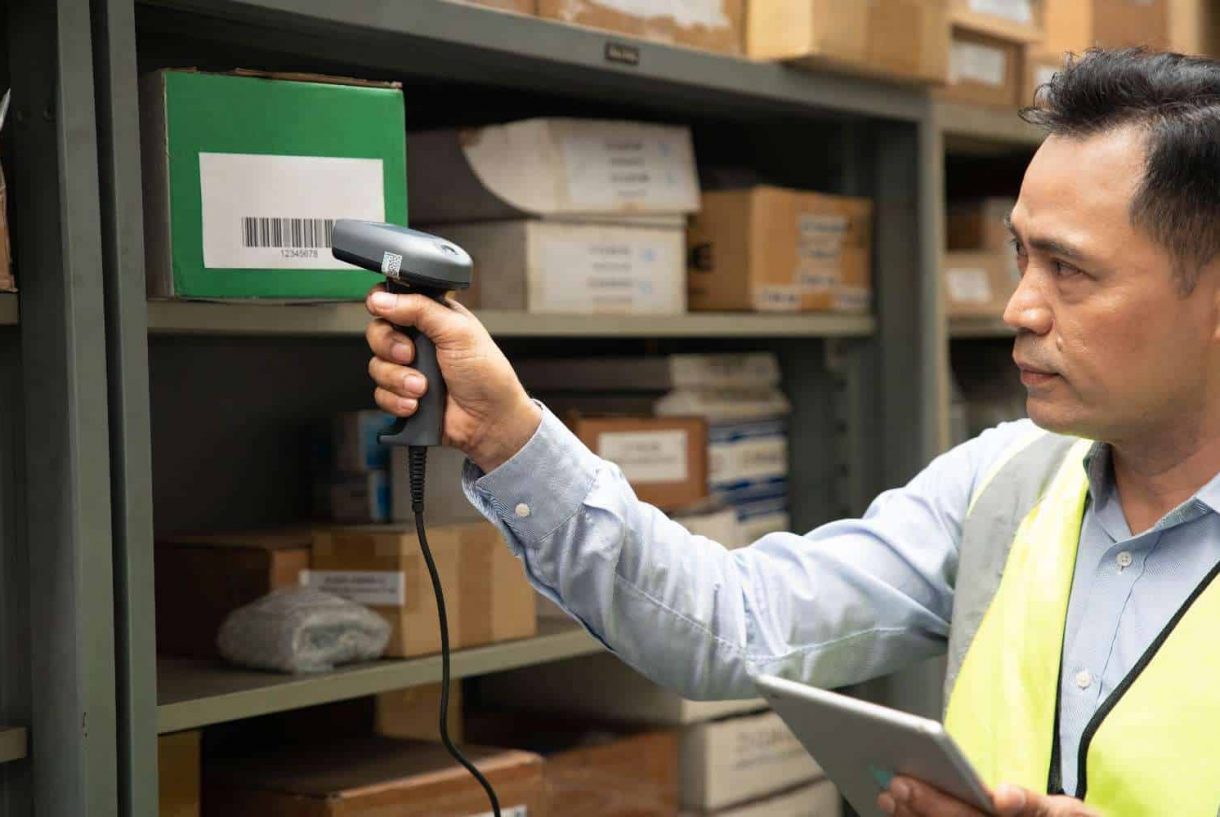
RFID transforms asset management by providing automated identification and real-time visibility across enterprise environments. Rather than depending on manual updates, organizations gain continuous insight into asset location, movement, and utilization.
Real-Time Visibility Into Every IT Asset
RFID Tags assign a unique ID to every asset, which can be read around the organization by RFID readers.
This enables IT teams to know where assets are at every point in their lifecycle, specifically:
- Initial deployment
- Employee assignment
- Department transfers
- Temporary relocation
- Maintenance activities
- Storage
- Retirement
Authorized personnel do not need to search the area for equipment; they can simply locate them and check inventory records.
Increasing security is also another advantage of real-time visibility, assisting companies in finding assets appearing in surprising locations, and ones that step out of preferences.
Faster, More Accurate Asset Audits
Traditional barcode audits require each asset to be individually scanned, making large-scale inventories both time-consuming and labor-intensive.
RFID significantly improves this process because multiple tagged assets can be identified simultaneously without requiring direct line-of-sight scanning.
The benefits include:
- Faster inventory verification
- Reduced manual labor
- Improved inventory accuracy
- Shorter audit preparation times
- Minimal disruption to daily operations
IT teams can complete enterprise-wide audits more efficiently while maintaining confidence that inventory records accurately reflect physical assets.Lorem ipsum dolor sit amet, consectetur adipiscing elit. Ut elit tellus, luctus nec ullamcorper mattis, pulvinar dapibus leo.
Automated Asset Movement Tracking
Assets frequently move between buildings, departments, project teams, and secure locations.
RFID helps organizations automatically record these movements, creating accurate historical records without relying on manual documentation.Lorem ipsum dolor sit amet, consectetur adipiscing elit. Ut elit tellus, luctus nec ullamcorper mattis, pulvinar dapibus leo.
Automated movement tracking supports:
- Department transfers
- Office relocations
- Equipment loans
- Data center asset management
- Secure area monitoring
- Unauthorized movement detection
Maintaining accurate movement records strengthens internal controls while reducing the likelihood of lost or misplaced equipment.
Improved Asset Lifecycle Management
Compliance extends beyond knowing where an asset is today. Organizations also need complete documentation of how each asset has been managed throughout its operational life.
RFID supports every stage of asset lifecycle management by documenting:
Lifecycle Stage | RFID Benefit |
Procurement | Register new assets quickly |
Deployment | Verify installation locations |
Daily Operations | Monitor usage and movement |
Maintenance | Track service history |
Reassignment | Maintain ownership records |
Retirement | Confirm secure asset removal |
This continuous asset history simplifies audits while supporting better planning for maintenance, replacements, and future investments.
Better Reporting for Compliance
Trustworthy reporting is key to proving compliance for both internal policies and regulatory obligations.
Since RFID automatically captures asset activity, organizations can use reports like:
- Current asset inventories
- Asset location history
- Maintenance records
- Utilization trends
- Transfer documentation
- Audit verification reports
Automated reporting lightens the administrative burden while enabling uniform documentation that backs compliance efforts.
Lowry Solutions powers accurate RFID asset tracking with integrated hardware, software, and Sonaria platform combined to make your data connected. Sonaria integrates seamlessly across ERP, WMS, and other enterprise systems to keep a correct record of assets while simplifying compliance as well as reporting.
Why Enterprises Choose Lowry Solutions for RFID Asset Tracking

Executing an RFID initiative involves much more than just hardware; it requires a partner who specializes in enterprise asset management. Lowry Solutions has 47+ years of experience tracking assets and inventory as well as over 20 years of RFID deployment capabilities ranging from standard, plug-and-play solutions to scalable solutions that can be performed based upon the unique needs of a business.
Lowry’s hardware-agnostic strategy enables organizations to select the best technologies from leading suppliers such as Zebra, Honeywell, Impinj, Getac, SOTI and Microsoft. RFID hardware, Sonaria integration, professional deployment, system configuration, training and support are provided as end-to-end services.
Lowry enables real-time visibility, automated workflows, and accurate compliance reporting by centralising all the asset data through Sonaria that can integrate with ERP and enterprise systems. This leads to better operational efficiency and improved IT asset management compliance.
What to Look for in an RFID IT Asset Management Solution
Selecting an RFID solution involves more than comparing hardware specifications. Organizations should evaluate whether the platform can support long-term compliance objectives while adapting to changing operational requirements.
Real-Time Asset Visibility
A modern solution should provide continuous visibility into asset location, movement, and status rather than relying on scheduled inventory counts.
This enables faster decision-making while reducing inventory discrepancies.
Enterprise Integrations
Asset tracking should integrate seamlessly with existing ERP, IT asset management, WMS, and enterprise software systems.
Integrated data reduces duplicate records while improving consistency across departments.
Lowry Solutions supports enterprise integration through Sonaria’s REST APIs and custom connectors, allowing organizations to incorporate RFID data into existing business processes.
Automated Reporting
Compliance depends on accurate documentation.
Comprehensive Lifecycle Management
An effective RFID solution should support every stage of the asset lifecycle, from procurement and deployment to maintenance, reassignment, and retirement.
Complete lifecycle visibility strengthens governance while improving long-term asset utilization.
Scalable RFID Infrastructure
Look for platforms that automatically generate:
- Inventory reports
- Asset movement history
- Lifecycle documentation
- Maintenance records
- Audit reports
- Utilization analytics
Automation reduces administrative effort while improving reporting consistency.
Enterprise environments evolve. New facilities, additional employees, and expanding asset inventories require solutions that can grow without disrupting operations.
Scalable infrastructure helps organizations extend RFID capabilities across departments, buildings, and geographic locations while maintaining consistent visibility.
Professional Deployment and Ongoing Support
Technology implementation is only one part of a successful RFID strategy. Professional planning, deployment, user training, and ongoing support play an equally important role in long-term success.
Lowry Solutions delivers end-to-end implementation services, helping organizations configure hardware, integrate enterprise systems, automate workflows, and support users throughout the solution lifecycle.
Future-Ready Platform
As organizations adopt additional tracking technologies, they need platforms capable of supporting future growth.
Sonaria’s ability to centralize RFID, barcode, GPS, Bluetooth, UWB, and IoT data provides organizations with a flexible foundation that can adapt as operational requirements change.
Conclusion
IT asset management compliance goes beyond infrequent inventory audits and spreadsheets that require manual updates. For a better-governed decision-making process, an organization needs live visibility to each asset along its lifecycle from procurement to spend.
RFID assists in achieving these objectives by automating asset identification, increasing inventory accuracy, tracking the movement of assets, and making reliable records of lifecycles. Leveraging automated reporting with a continuous view of your organization effectively lowers compliance risks while also maximizing overall asset management efficiency.
Lowry Solutions combines its enterprise RFID technology, professional implementation services, and B2B Sonaria platform to allow organizations to build connected, scalable asset tracking environments. Lowry combines hardware, software, and enterprise systems into a single solution, enabling businesses to achieve compliance, operate more efficiently, and live with the visibility needed to manage IT assets with confidence.
Frequently Asked Questions
RFID provides real-time asset visibility and automated tracking, improving inventory accuracy, simplifying audits, and supporting compliance.
RFID can track laptops, servers, desktops, networking equipment, mobile devices, printers, monitors, and other IT assets.
Yes. Lowry Solutions integrates RFID data with ERP and enterprise systems through the Sonaria platform.
RFID scans multiple tagged assets at once, reducing audit time while improving inventory accuracy.
Lowry Solutions combines 47+ years of tracking expertise, 20+ years of RFID experience, Sonaria integration, and end-to-end support to improve compliance and operational efficiency.

A Horizons Talent Alumnus and Microsoft Certified Systems Engineer (MCSE), the author brings a proven track record of success in senior shared-services leadership roles within large, complex multinational organizations, particularly in the manufacturing sector.
With deep experience at Senior Manager level, they have led strategic customer relationships by understanding core business imperatives, shaping service and solution propositions, and delivering measurable business outcomes.