
By now, you’ve surely heard the buzz surrounding radio frequency identification, or RFID. Supply chain businesses around the world are using it to improve their productivity and increase the return on their investments. However, many companies are still unsure about RFID systems in general. They’re wondering what technology they include and how they will actually work in their warehouse or distribution center.
If you or your co-workers have wondered these same things, Lowry is here to help and explain. Follow this guide to find out what RFID is, what it does, and how it can benefit you. A good managed IT services firm should also be able to identify if you need an RFID solution for your business.
What Is RFID Technology, Exactly?
RFID is a method of data collection that involves automatically identifying objects through low-power radio waves. Data is sent and received with a system consisting of RFID tags, an antenna, an RFID reader, and a transceiver.
- RFID is a method of data collection that involves automatically identifying objects through low-power radio waves.
- Data is sent and received with a system consisting of RFID tags, an antenna, an RFID reader, and a transceiver.
How Does RFID Work?
Like barcode technology, an RFID Scanner recognizes locations and identification of tagged items — but instead of reading laser light reflections from printed barcode labels, it leverages low-power radio frequencies to collect and store data. In a warehouse or distribution center, RFID technology is used to automate data collection. The transceiver reads radio frequencies and transmits them to an RFID tag. The identification information is then transmitted from a tiny computer chip embedded in the tag and broadcast to the RFID reader.
Here are a few of RFID’s helpful features and functions:
- Tags can trigger alarms when moved
- Communication between readers and tags is not contingent upon orientation
- Data can be automatically read and stored
- Tags can carry unique or standardized product codes
- Items can be individually labeled, but read in mass
- Tag data is compatible with WMS and ERP systems
- Tags are difficult to reproduce/counterfeit
What Is The Difference Between RFID Scanner And Barcode Technology?
Aspect | Barcode Technology | RFID Scanner |
Functionality | Barcode and RFID share similar functionalities, but they have one distinct difference: human intervention, or “line of sight.” | Barcode and RFID share similar functionalities, but they have one distinct difference: human intervention, or “line of sight.” |
Definition of Line of Sight | This refers to the distance between the operator of the data collection device (barcode scanner or RFID reader) and the labeled or tagged item — in other words, whether or not they are close enough to the item to see it. | This refers to the distance between the operator of the data collection device (barcode scanner or RFID reader) and the labeled or tagged item — in other words, whether or not they are close enough to the item to see it. |
Scanning Requirement | To get a good barcode read, operators must position their handheld scanner within the line of sight of the item. | To collect data using RFID Technology, operators are not as limited — they simply need to be within the range of the tag. |
Operator Movement | Operators must position their handheld scanner within the line of sight of the item, requiring physical movement from shelf to shelf. | Employees can collect data for any item within the read range without physically moving from shelf to shelf. |
Multiple Item Scanning | Typically reads one item at a time due to line-of-sight requirement. | This also means that more than one item can be read at once. |
Operational Value | Requires more manual effort due to line-of-sight constraints. | For those reasons, many companies are looking to RFID to add even more value to their operations. |
What Are The Benefits Of Using Rfid?
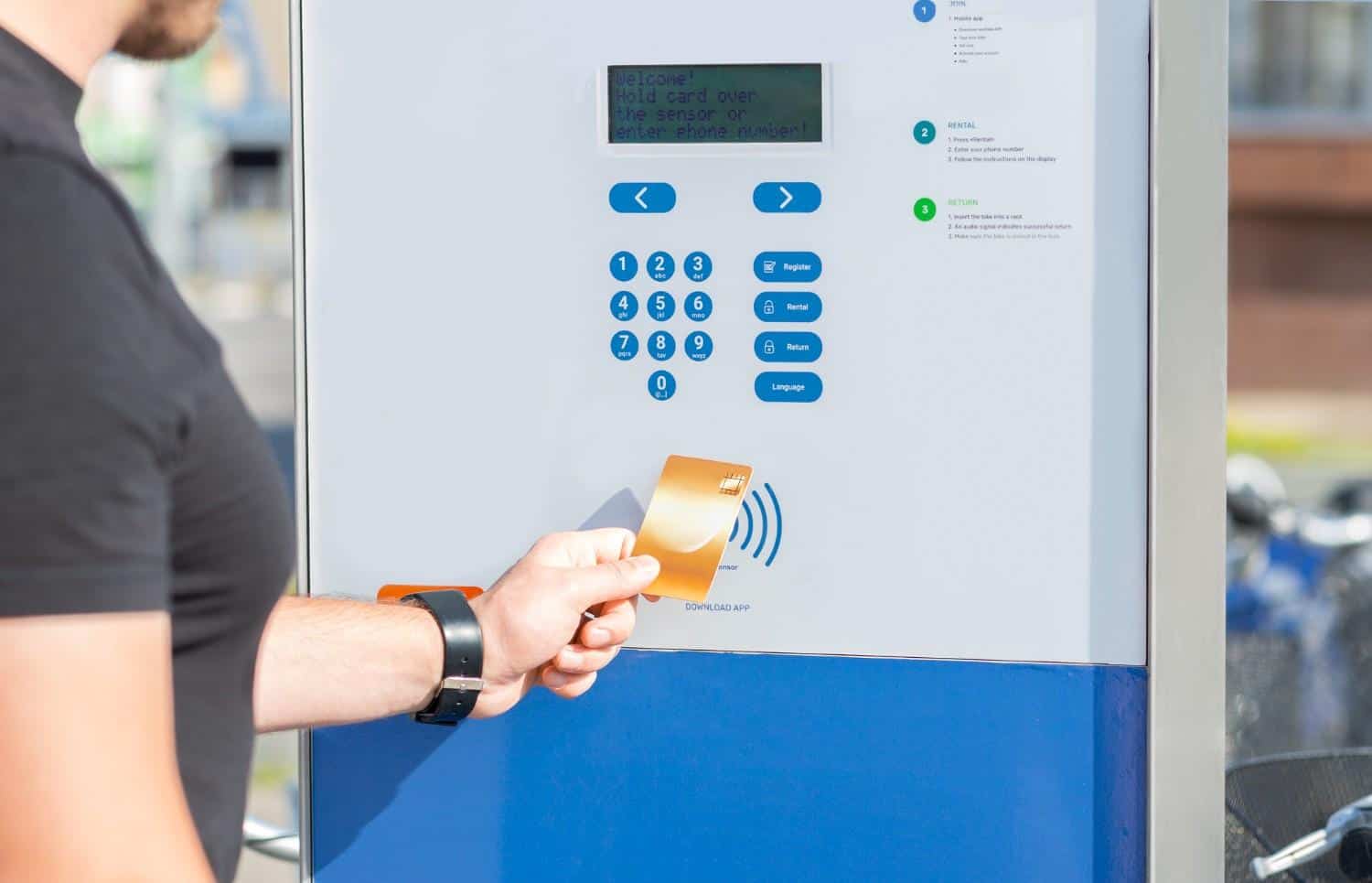
RFID enhances supply chain efficiency by automating inventory and asset tracking, reducing costs, and improving visibility. Paired with mobile device management solutions, it ensures secure, real-time tracking with handheld scanners and devices.
- Tracks inventory and assets efficiently.
- Cuts costs in manufacturing, distribution, and inventory management.
- Enhances visibility, eliminating labor-intensive processes.
- Streamlines operations with secure mobile device integration.
By automating data collection, RFID saves time, allowing employees to focus on customer service, shipping, and picking, while improving speed and accuracy.
- Automates data collection, saving time.
- Frees employees for customer service and operations.
- Boosts speed and accuracy of tasks.
This automation reduces labor costs and inventory carrying costs through higher throughput. Accurate, on-time shipments increase customer satisfaction.
- Reduces labor and inventory carrying costs.
- Ensures accurate, on-time shipments.
- Improves customer satisfaction.
Why RFID Delivers Even Greater Value When Integrated With Enterprise Tracking Solutions
RFID technology is fast and accurate at collecting data, but the key to its true value lies in what businesses do with that knowledge. The data collection is only one piece of the puzzle. But organizations also need an actionable platform, a centralized system that converts the data collected from RFID reads into insights to help teams understand facts in real time.
This is where an all-in-one asset and inventory tracking solution comes in handy. RFID does not function as a standalone technology, but instead, it spans the visibility of complete supply chains alongside barcode systems, GPS, Bluetooth, Ultra-Wideband (UWB), and IoT sensors. The amalgamation of data sourced from multiple sources gives businesses one single source of truth to drive the accurate performance of inventory, equipment, and operational assets.
Turning RFID Data Into Actionable Intelligence
Thousands of assets are managed by modern enterprises across warehouses, manufacturing facilities, distribution centers, and sites in the field. Without a central management system, even perfectly accurate RFID data can become complex to interpret and analyze.
Addressing that challenge is Lowry Solutions with Sonaria, its proprietary track-and-trace platform that consolidates data from RFID and other tracking technologies into a single dashboard. Rather than piecing together info from different systems, organizations should be able to track asset location, stock levels, service records, and operational characteristics all in one place.
Equipped with automated reporting and real-time alerts, teams can identify inventory discrepancies quickly, find crucial equipment when they need to be located, and troubleshoot concerns before they negatively impact operations.
RFID Across Different Industries
RFID technology is highly adaptable and supports a wide range of industry-specific workflows.
Industry | Common RFID Applications |
Manufacturing | Work-in-progress tracking, tool management, Direct Part Marking, production visibility |
Warehousing & Distribution | Inventory counts, receiving, shipping verification, pallet tracking |
Healthcare | Medical equipment tracking, patient asset management, pharmaceutical inventory |
Retail | Inventory accuracy, stock replenishment, loss prevention |
Transportation & Logistics | Shipment visibility, asset tracking, supply chain monitoring |
Because every organization has unique operational requirements, RFID deployments can be customized to support specific workflows, compliance requirements, and business objectives.
Choosing The Right RFID Solution
RFID implementation is much more than just choosing tags and readers. The performance of the system is affected by various parameters, including read range, environmental conditions, types of assets to be tracked, needs, integration requirements, and future scalability.
A complete deployment of an RFID system usually consists of:
- RFID readers and antennas designed for the environment in which it will be operating
- Tags chosen for the asset or product you follow
- Integration with ERP along with the warehouse management systems
- Automated workflows and reporting
- Continual support, mentorship, and lifecycle management
Having an established technology partner also ensures that hardware, software, and the processes they support work together consistently from installation to long-term operation.
Building A Smarter, More Connected Operation
As organizations continue to modernize their supply chains, RFID serves as a foundation for broader digital transformation initiatives. When combined with barcode technology, IoT sensors, GPS, and enterprise software, RFID enables businesses to automate routine processes, improve inventory accuracy, reduce manual effort, and gain real-time operational visibility.
Lowry Solutions takes this integrated approach by delivering technology-agnostic tracking solutions that combine certified hardware, intelligent software, professional deployment, and ongoing support. The result is a scalable asset and inventory tracking ecosystem that helps organizations improve efficiency, reduce costs, and maintain greater control over their operations as they grow.
If you have any other questions, please contact an expert at Lowry Solutions. We’d be happy to help!

A Horizons Talent Alumnus and Microsoft Certified Systems Engineer (MCSE), the author brings a proven track record of success in senior shared-services leadership roles within large, complex multinational organizations, particularly in the manufacturing sector.
With deep experience at Senior Manager level, they have led strategic customer relationships by understanding core business imperatives, shaping service and solution propositions, and delivering measurable business outcomes.