
Retail inventory management is getting more demanding than ever. Today’s retailers are pushed to keep control of inventory across stores, warehouses, online channels, and different fulfillment routes, while still showing accurate stock visibility in real time.
Traditional barcode systems often struggle to support the speed and complexity of modern retail operations. Manual scanning tends to eat up time, cycle counts can drift into inaccuracies, and updates to inventory are frequently delayed. As SKU volumes keep climbing and omnichannel fulfillment keeps expanding, retailers start looking for faster, and also more “smart” methods to handle inventory, not just the same process again and again.
RFID enables automated, real-time inventory visibility across retail operations, improving stock accuracy while reducing manual labor.
At Lowry Solutions, RFID is treated as more than a simple tracking upgrade. Once it’s integrated with enterprise systems and existing workflows, RFID becomes a powerful tool for improved inventory visibility, operational efficiency, and stronger retail outcomes.
What Is an RFID System in Retail?

RFID systems use radio frequency to identify and follow products as they move around the shopping area. RFID, or Radio Frequency Identification, helps retailers keep an eye on inventory in real time without having to depend on manual barcode scanning.
Compared with traditional barcode setups, RFID is different because it doesn’t depend on direct line of sight. That means scanning can happen while items are still in motion, and several products can get identified all at once, so the whole inventory process tends to be quicker and also more reliable.
A retail RFID setup usually comes with a few building blocks, like:
- RFID tags placed on the products
- RFID readers that capture tag data
- Antennas used for signal transmission
- Software platforms that process and manage inventory data
Each RFID tag has its own distinct digital identifier tied to one particular product. When tagged items are scanned through stores, back rooms, or distribution facilities, the RFID readers automatically collect the inventory details and then pass them to the systems that are connected.
In modern retail operations, RFID systems are often integrated with:
- POS systems
- ERP platforms
- Warehouse management systems
- Barcode and IoT technologies
RFID is implemented as part of a connected retail ecosystem designed to improve operational visibility and inventory control across the entire business.
How an RFID System Works in Retail
RFID technology creates continuous visibility into inventory movement by automating the data collection process.
Step 1: Product Tagging
RFID tags are embedded into product labels, packaging, or hang tags. Each tag contains a unique digital identity linked to product information within the inventory management system.
Step 2: Data Capture Through RFID Readers
RFID readers are placed in key retail locations such as:
- Stockrooms
- Store entrances
- Sales floors
- Receiving areas
Handheld readers can also be used for cycle counts and inventory searches.
Step 3: Real-Time Data Transmission
As products move through the retail environment, RFID readers capture tag data automatically and send it to the software platform in real time.
This provides immediate visibility into:
- Product location
- Inventory movement
- Stock availability
Step 4: Data Integration
The RFID software platform processes inventory data and integrates it with systems such as:
- POS software
- Inventory management systems
- ERP platforms
- Warehouse management systems
Step 5: Automated Insights and Workflows
Once inventory data becomes centralized, retailers can automate tasks such as:
- Stock alerts
- Replenishment triggers
- Inventory reporting
- Loss prevention monitoring
Lowry Solutions focuses on RFID systems that support continuous, automated inventory tracking with minimal manual intervention.
Key Components of a Retail RFID System
A successful retail RFID deployment depends on several technologies working together seamlessly.
RFID Tags
Passive RFID tags are commonly used for item-level retail tracking. These tags are cost-effective and ideal for large inventories.
RFID Readers
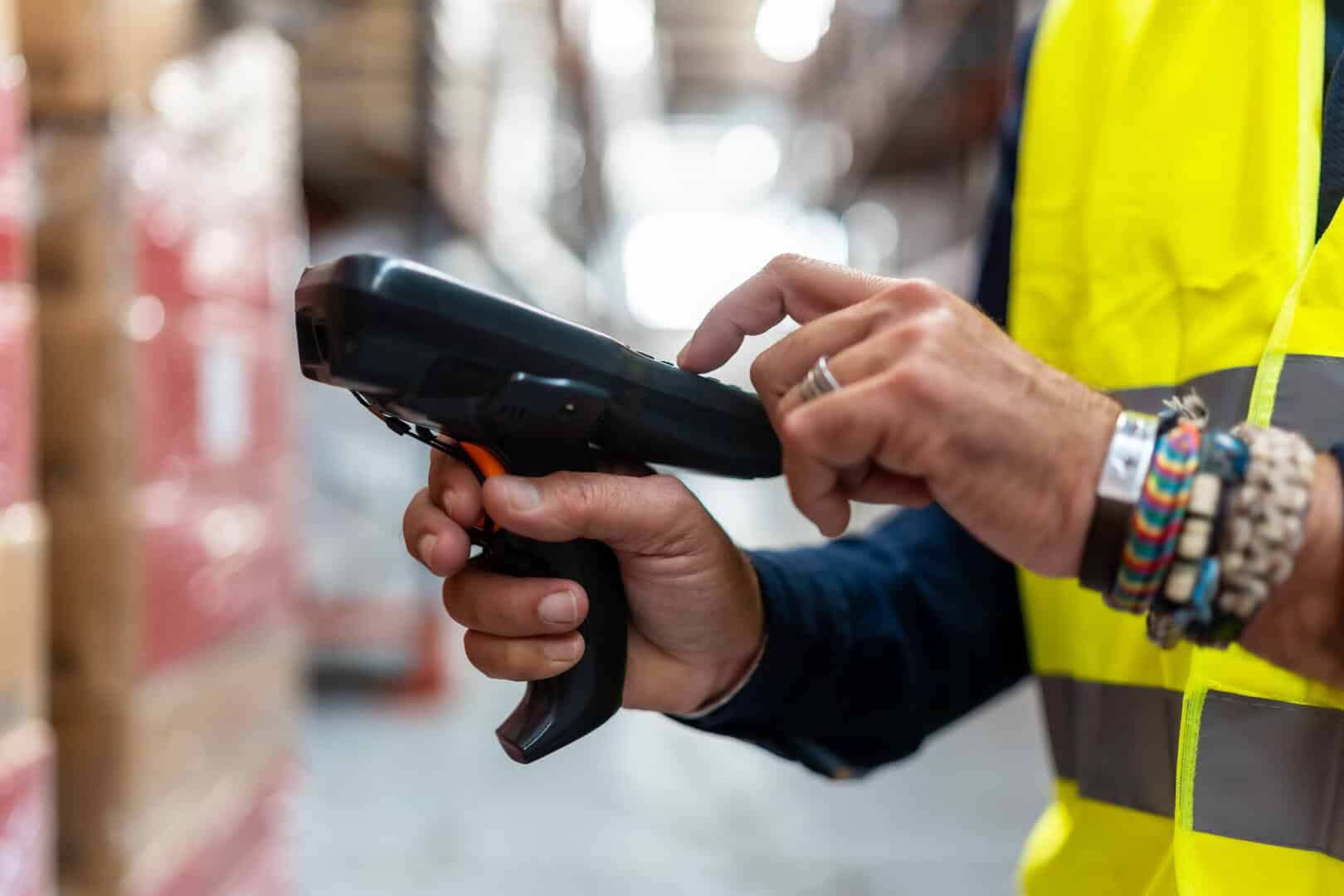
Retailers use both fixed and handheld readers.
Fixed readers are installed in:
- Store entrances
- Receiving docks
- Stockrooms
Handheld readers help employees perform:
- Cycle counts
- Shelf audits
- Product searches
Antennas
Antennas transmit radio signals between readers and RFID tags, enabling accurate data capture across retail spaces.
Software Platform
The software platform acts as the centralized control center for inventory visibility, analytics, reporting, and workflow automation.
Lowry Solutions emphasizes centralized visibility platforms similar to the Sonaria model, where multiple tracking technologies are unified into a single operational environment.
Integration Layer
RFID systems deliver the greatest value when integrated with enterprise systems such as:
- POS systems
- ERP software
- Warehouse management systems
This integration enables seamless inventory visibility across all retail channels.
How RFID Improves Retail Tracking
One of the biggest advantages of RFID is improved inventory tracking accuracy and visibility.
Real-Time Inventory Visibility
RFID allows retailers to track products across:
- Backrooms
- Sales floors
- Warehouses
- Supply chains
This helps teams locate products quickly and maintain accurate inventory records.
Accurate Stock Counts
Manual inventory counting is really slow and prone to human error. With RFID, the counting step gets automated, and the accuracy goes up a lot, almost immediately.
Multi-Location Tracking
Retailers are able to follow stock across several stores and warehouses at the same time. This helps with planning the inventory and also making better fulfillment calls.
Faster Inventory Audits
When companies used to do cycle counts, it would take hours. Now, with RFID, those same counts can be done in minutes using handheld readers.
Lowry Solutions supports centralized inventory visibility so retailers can keep a dependable, real-time RFID tracking system throughout their operations.
How RFID Improves Retail Efficiency

Beyond tracking improvements, RFID technology creates measurable operational efficiencies throughout retail environments.
Benefit #1: Faster Store Operations
RFID in retail automates those inventory updates, and it cuts down the amount of manual scanning that people have to do.
So employees spend less time on repetitive inventory tasks and more time on operational priorities, which involve customer service work.
Benefit #2: Better Replenishment
With real-time inventory visibility, replenishment workflows can run in a much more automatic manner.
Retailers can set stock alerts to trigger when inventory levels drop under predefined thresholds. This helps avoid stockouts, but also reduces excess inventory pile-ups.
Benefit #3: Better Customer Experience
Inventory accuracy really does affect customer satisfaction in a direct way.
RFID helps retailers keep product availability stronger across stores and online ecommerce channels.
And associates can find products faster, which improves responsiveness, and it reduces delays.
Benefit #4: Less Shrinkage
RFID supports improved inventory accountability and stronger loss prevention actions.
Retailers can track product movement more effectively, notice discrepancies faster, and gain sharper visibility into theft or inventory that ends up misplaced.
Benefit #5: More Streamlined Omnichannel Fulfillment
Modern fulfillment styles, like BOPIS and ship-from-store, depend heavily on accurate inventory data.
RFID improves inventory confidence across channels, so retailers can complete orders more accurately and reduce canceled or delayed shipments.
Challenges and Considerations
While RFID offers significant advantages, retailers should plan carefully before implementation.
Common challenges include:
- Initial deployment costs
- Tagging large inventories
- Signal interference in certain environments
- Integration complexity
These challenges can often be addressed through:
- Phased implementation strategies
- Proper hardware selection
- Expert-led deployment planning
Lowry Solutions designs scalable RFID systems that align with retail workflows, operational goals, and long-term growth plans.
Why RFID Requires a Strategic Retail Approach
RFID success is not simply about attaching tags to products.
To maximize value, retailers must align RFID initiatives with:
- Store operations
- Supply chain workflows
- Inventory management processes
- Fulfillment strategies
- Enterprise software systems
Without proper integration, retailers risk creating disconnected data environments that limit operational visibility.
Lowry Solutions approaches RFID as a complete operational ecosystem. By combining RFID hardware, enterprise integrations, inventory software, and workflow automation, Lowry helps retailers build scalable systems designed for long-term efficiency and growth.
Conclusion
RFID systems are transforming retail operations by enabling real-time inventory visibility, automation, and improved operational efficiency.
Modern retailers manage far more than in-store inventory operations. As omnichannel fulfillment demands continue to grow, retailers require accurate, connected inventory systems that support faster decision-making and improved customer experiences.
Successful RFID implementation depends on more than hardware deployment alone. Long-term value comes from strategic integration with enterprise systems, operational workflows, and fulfillment processes.
Lowry Solutions helps retailers create RFID setups that can grow and stay future-ready, through end-to-end deployment, smooth software integration, and tracking solutions at an enterprise level, powered by Sonaria.
Upgrade your retail flow with an RFID equipment tracking system. Contact Lowry Solutions to design a scalable RFID strategy tailored to your retail infrastructure and fulfillment operations.

A Horizons Talent Alumnus and Microsoft Certified Systems Engineer (MCSE), the author brings a proven track record of success in senior shared-services leadership roles within large, complex multinational organizations, particularly in the manufacturing sector.
With deep experience at Senior Manager level, they have led strategic customer relationships by understanding core business imperatives, shaping service and solution propositions, and delivering measurable business outcomes.