Summary: Efficient inventory management ensures accuracy and reliability throughout the supply chain while also providing visibility and compliance. The interlinked systems of warehousing, logistics, and retail have transformed data into easy-to-understand insights that are used for forecasting and loss prevention.
|
A speedy, precise, and well-timed retail operation is the requirement of modern times. The competition will force consumers to embrace up-to-date inventory procedures compatible with omnichannel delivery, digital shelf management, and today’s volatile supply chains. The control of stock has transformed into a network powered by data that links barcodes, RFID, IoT, and cloud analytics to offer constant visibility.
The old-fashioned way of inventory management, which involved clipboards, manual counts, and end-of-month reconciliations, has been replaced by a digital ecosystem comprising sensors, scanners, and cloud-based intelligence. The next-gen systems continue to provide accumulation and location flow visibility without difficulties through the application of barcodes, RFID, IoT devices, and advanced analytics.
The Inventory Control Challenge
Statistics show that nearly 43% of retailers identify stockouts as the primary cause of lost sales. At the same time, global overstock contributes to trillions of dollars locked up as idle capital. Consequently, effective inventory management has become necessary for a competitive edge. Techniques today, which are driven by RFID, IoT, cloud computing, and AI, do not merely monitor the products but also forecast the demand, minimize the losses, and improve the versatility of the business operations.
Defining Modern Inventory Control
Today, inventory control is a comprehensive process that includes and connects data collection, storage, movement tracking, and analytics. Stacking methods, manual counting, periodic audits, and spreadsheets are inadequate in a multichannel retail environment. By using contemporary inventory control, retailers can conduct proper stock level management, waste minimization, and omnichannel fulfilment support.
For a well-adjusted control system, a few critical components are needed to interlink people, products, and processes:
- Tagging Systems: Products are enabled with individual IDs through Barcodes, QR codes, NFC, and RFID technology.
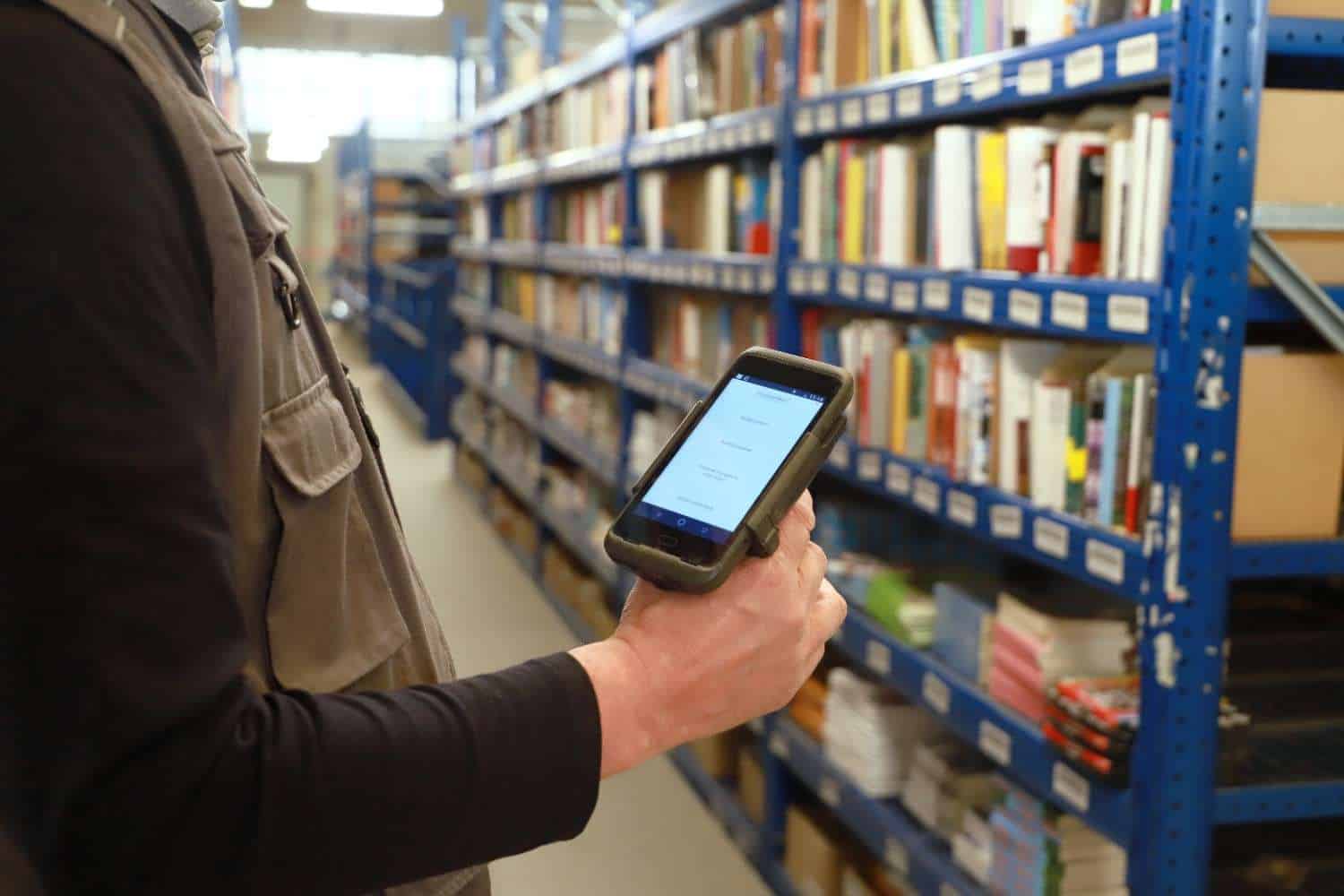
- Data Capture: The scanners, mobile devices, and IoT-enabled shelves continuously flow data to the central systems.
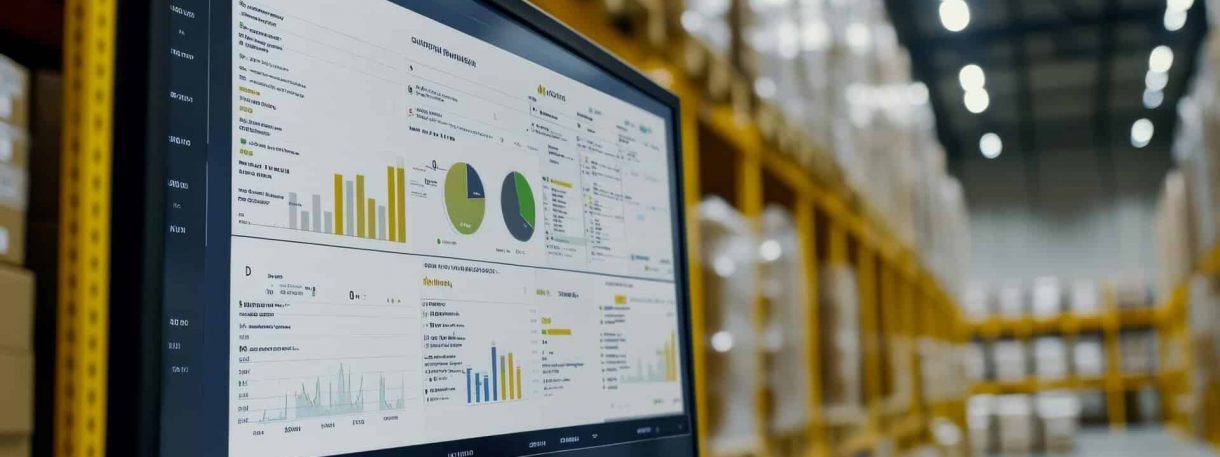
- Analytics Platforms: Cloud-based software executes the movement of the whole inventory in real-time, thus producing insights regarding stock levels, turnover, and reorder needs.
- System Integration: Inventory management merges with ERP, POS, WMS, and eCommerce applications, thus producing a consolidated view of all the operations.
Retailers adopting these connected systems often see inventory accuracy reach around 95%, while labor costs drop by 25–40%.
How Inventory Control Systems Work

The primary step in inventory control is the tagging of items. A product can be marked during production or upon arrival at the warehouse. It can be given a barcode, RFID tag, or QR code. Such information opens up the possibility to recognize quick-moving products, initiate the restocking process, spot delays, and draw attention to anomalies. The data will be synced or updated instantly with the enterprise systems such as ERP, POS, and WMS. The integration results in a combined and constantly updated stock record, which is utilized for predictive analytics.
The automation process is highly dependent on RFID technology. With barcodes, a single scan is required for each code, but in contrast, RFID can simultaneously read hundreds of tags and does not require a direct line of sight. This feature in large-scale retail applications results in a manual cycle-count reduction of up to 80% and a boost in the accuracy of inventory records above 97%, according to McKinsey’s Retail Technology Outlook 2024 report.
Key Benefits of Smart Inventory Control
The implementation of smart inventory control results in tangible advances that affect all retail operations, from shop shelves to supplier management.
Optimized Replenishment and Procurement
The automation process enables inventory systems to create reorder alerts based on how fast an item sells and the preset safety stock levels. Retailers can lower their holding costs while keeping the stock of high-demand items. Research indicates that automated systems can reduce procurement mistakes by 30-50%, which translates to huge operational cost savings.
Defects and Losses Minimizing
An inventory tracking system works like a security system that identifies theft, misplacement, and damage, which, in some cases, might result in expensive circumstances if not detected early. RFID-based systems allow the real-time tracking of products, providing companies with visibility of the products throughout the supply chain. Through shrinkage reduction, firms will maintain their profit and increase overall profitability.
Enhanced Customer Experience
Inventory control allows goods to be present when and where customers wish to have them. This results in decreased backorders and sales losses, increasing customer loyalty. When instant gratification is considered a norm, the company’s presence becomes essential in winning and retaining customers over competitors.
Making Decisions Based on Data
Analytics can help businesses control purchasing decisions, uncover and forecast consumer needs, plan promotions, and measure stock turnover. The resulting forecasting skills improve the firm’s overall and financial effectiveness.
Technology Approaches in Inventory Control
New inventory systems fuse various identification and sensing technologies to ensure precision and scalability at the same time. Every technology has its own specific function, depending on the kind of product and the working atmosphere.
Advanced RFID Solutions for Smarter Inventory Management
- Leading RFID Technology
- Automated Data Collection
- RFID Expertise
- Industry Partnerships
- Continuous Support
- Industry-Agnostic Software
- RFID Inventory Asset Tracking Technology
Put Expertise to Work
Advances in RFID inventory tracking technology emerge daily. Sonaria, an RFID software solution provided by Lowry Solutions, integrates with technology from global leaders and adapts to unique business needs.
Using Microsoft Azure for the SaaS solution provides:
- Stronger cybersecurity
- Compliance with evolving regulations
- Immediate, accurate inventory counts
- Higher personnel productivity
- Improved profitability through operational efficiencies and informed decision-making
Automated inventory tracking features deliver inventory data, financial and asset reports, and real-time alerts for potential concerns.
Accelerate Asset Tracking
An RFID inventory management system simplifies tracking, reduces human error, and provides comprehensive insights. Benefits include:
- Better utilization of assets
- Increased operational efficiency
- Cost-effective, real-time inventory data
- Reduced asset loss or theft
- Accurate, millisecond-level online inventory information
Systems go beyond barcode scanning, offering web-based tracking and mobile applications for enterprise-scale operations.
Reliable RFID Partner
Keeping an inventory tracking system up-to-date should be straightforward. Partnering with industry-leading technology providers ensures:
- Access to software and hardware vendors for the best tracking solutions
- Comprehensive cybersecurity certifications
- Compliance with regulatory requirements, including OSHA for chemical inventory
Leverage Industry Partnerships
Collaborating with leading technology providers strengthens real-time RFID tracking systems to ensure seamless performance and faster ROI. Key partners include:
- Linux and Microsoft for software and cloud integration
- Zebra Technologies and Impinj for RFID hardware and scanning devices
- Honeywell for co-branded, compliant inventory tracking solutions
These partnerships enable development-level access to essential technology:
- Warehouse management and ERP system integration
- Web-based inventory tracking and mobile apps
- RFID tags, barcodes, and smart label options
- Handheld and stationary RFID readers and scanners
Integration of these components ensures accurate, secure, and efficient asset tracking that fits existing inventory control systems.
Dedicated Support for RFID Inventory Tracking Solutions
Experience and expertise support the design, delivery, and deployment of RFID inventory tracking programs. Services include:
- Site readiness analysis
- Custom inventory tracking programs
- Project implementation
- Specialized staff training
- Ongoing technical support, including 24/7 helpdesk and Tier 1–3 support
This combination of customization and support drives operational performance beyond standard or free inventory tracking software.
RFID Technology For Every Industry
Customized asset management solutions provide real-time inventory tracking across:
- Manufacturing
- Transportation and logistics
- Warehouse and distribution
- Healthcare
- Retail
- And more
These solutions support operational goals and efficiency in any sector.
Building a Future-Ready Inventory Ecosystem

The retail industry today demands scalable, secure, and integrated systems. The modern-day inventory ecosystem equally relies on technology that can be depended on, processes that are well defined, and real-time data for the purpose of maintaining operational efficiency. Through the comprehensive experience of IoT, RFID, blockchain, and barcode solutions, the firms have an opportunity to set up systems that will guarantee accurate asset tracking from the moment of receipt to the point of shipment, irrespective of the industry.
A well-structured strategy is the cornerstone of the project’s successful execution. The first step is a thorough analysis of the current inventory management practices. This is followed by an evaluation, which gives rise to specific suggestions for changes. The next phase includes configuring, testing, and installing hardware and software. Training of all personnel, accompanied by support that lasts for the entire period, assures that the system performs effectively and maintains the same output quality.
Inventory data is gathered and transformed into a useful format using sophisticated software platforms that integrate seamlessly with ERP and warehouse management systems to provide a real-time view of stock levels. This speeds up decision-making, minimizes losses, maximizes asset utilization, and enables companies to react promptly to sales orders and operational pressures.
Inventory Control as a Competitive Advantage with Lowry Solutions
Lowry Solutions offers cutting-edge inventory tracking and management systems combining RFID, barcode, IoT, and RTLS technology to give real-time visibility, increased productivity, and practical insights. More than 10,500 companies have put their trust in Lowry, whose operations are supported by many years of experience. Such authority is implicit in the partnerships with industry hardware and software players such as Zebra, Honeywell, Impinj, Teklynx, and Getac, as well as technology integration, which produces reliable, scalable, and future-proof solutions.
We offer an inventory and asset solution like Sonaria, which supports real-time data consolidation for ERP and WMS integration and provides dashboards, mobile apps, and custom reporting. Cloud-hosted mobile device management, cybersecurity compliance certification (SOC2), and technical support are all part of extended services that help maintain the security and efficiency of the operations.
Lowry is there to facilitate the process of turning over inventory control into a strategic advantage in terms of operational excellence and smooth asset tracking across manufacturing, healthcare, logistics, retail, and other sectors. Request a quote or consultation and let us help implement an advanced inventory tracking system that will always keep your business ahead of the competition.
FAQs
Centralized inventory control connects real-time data from all stores, warehouses, and fulfillment centers. Moreover, automated tracking eliminates human-induced mistakes and ensures stock is updated immediately everywhere. Lowry Solutions delivers combined RFID and IoT systems, giving thorough, continuous, dependable visibility within a retailer’s network.
Manual scanning is necessary for barcode systems, which are suitable only for basic tracking applications. RFID systems enable automatic reading and quicker data gathering in places where there is no direct visibility. Hybrid systems merge both options to find a middle ground in cost and performance. Lowry Solutions assists retailers in choosing and implementing the most suitable combination of technologies according to their operational size and product assortment.
Absolutely. The latest inventory systems are designed for easy connection, enabling sales, logistics, and accounting systems to operate in a data-sharing environment. Such a setup brings about precise reporting and efficient operations. Lowry Solutions develops and executes integrations connecting ERP, POS, and WMS systems to form a unified inventory ecosystem.
Automated monitoring detects discrepancies early, helping retailers act before losses occur. Predictive tools signal when stock levels drop below safe limits, preventing missed sales and overstocking.
Strong encryption, access control, and role-based permissions would go a long way toward safeguarding confidential inventory-related data. Secure RFID protocols combined with cloud authentication prevent data tampering and unauthorized access. Lowry Solutions always provides security architecture and compliance measures for inventory management deployment.

A Horizons Talent Alumnus and Microsoft Certified Systems Engineer (MCSE), the author brings a proven track record of success in senior shared-services leadership roles within large, complex multinational organizations, particularly in the manufacturing sector.
With deep experience at Senior Manager level, they have led strategic customer relationships by understanding core business imperatives, shaping service and solution propositions, and delivering measurable business outcomes.