
| Summary: Actual 2D barcode systems need modern businesses to handle advanced data requirements that exceed the capabilities of 1D barcodes. The ability of 2D barcodes to encode all item details through one scan enhances traceability and recall speed while improving workflow efficiency and system integration. The system enables supply chains to achieve better visibility and compliance while building operational resilience. |
Barcodes remain the most widely used data-capture technology across retail, manufacturing, healthcare, logistics, and government because they are simple, reliable, and cost-effective. The system has maintained its original function since its establishment to enable the quick identification of products at the time of sale.
Modern business operations require organizations to deliver additional capabilities beyond their existing system. Organizations must enhance their operational visibility while improving their product recall processes and maintaining precise stock records at different facilities to comply with rising regulatory requirements and customer demands.
Supply chains have become longer, while businesses need to handle increased data requirements, and they must now provide complete visibility of their operations throughout the entire process.
The global shift towards using two-dimensional (2D) barcodes originated as an answer to operational challenges that businesses experienced. The data needs of contemporary business operations exceed what traditional one-dimensional barcodes can provide.
From Lowry Solutions’ perspective, informed by decades of barcode and RFID deployments, organizations choose 2D barcodes for their labeling needs because this decision transforms their data management approach, which affects their complete operational structure.
The Limits of 1D Barcodes in Modern Operations
Traditional 1D barcodes encode a single identifier, most commonly a Global Trade Item Number (GTIN). The identifier functions as a key that directs to further details that exist in different locations, most frequently found in ERP, WMS, and product database systems.
The system operated correctly when organizations needed only to track basic product information. The system now creates operational difficulties for businesses.
Separate processes must be used to capture essential data because 1D barcodes cannot encode extra information, which includes lot numbers, batch details, serial numbers, and expiration dates. The process requires additional scans, manual data entry, and backend lookups, which depend on database access.
Over time, these limitations create operational challenges:
- Manual workarounds become part of daily workflows
- Recalls and audits take longer because data is fragmented
- Item-level traceability is difficult or inconsistent
- Consumer-facing data requirements cannot be supported at the barcode level
Lowry observes these challenges in both warehouse operations and healthcare facilities. Frontline teams require additional time to find, confirm, and fix data when they encounter missing or delayed information. The process results in higher labor expenses, together with operational mistakes and work interruptions.
The use of 1D barcodes in real-world situations necessitates operations to rely on outside databases and manual work. The system becomes a burden because it depends on both rising volumes and stricter compliance standards.
What Makes 2D Barcodes Different
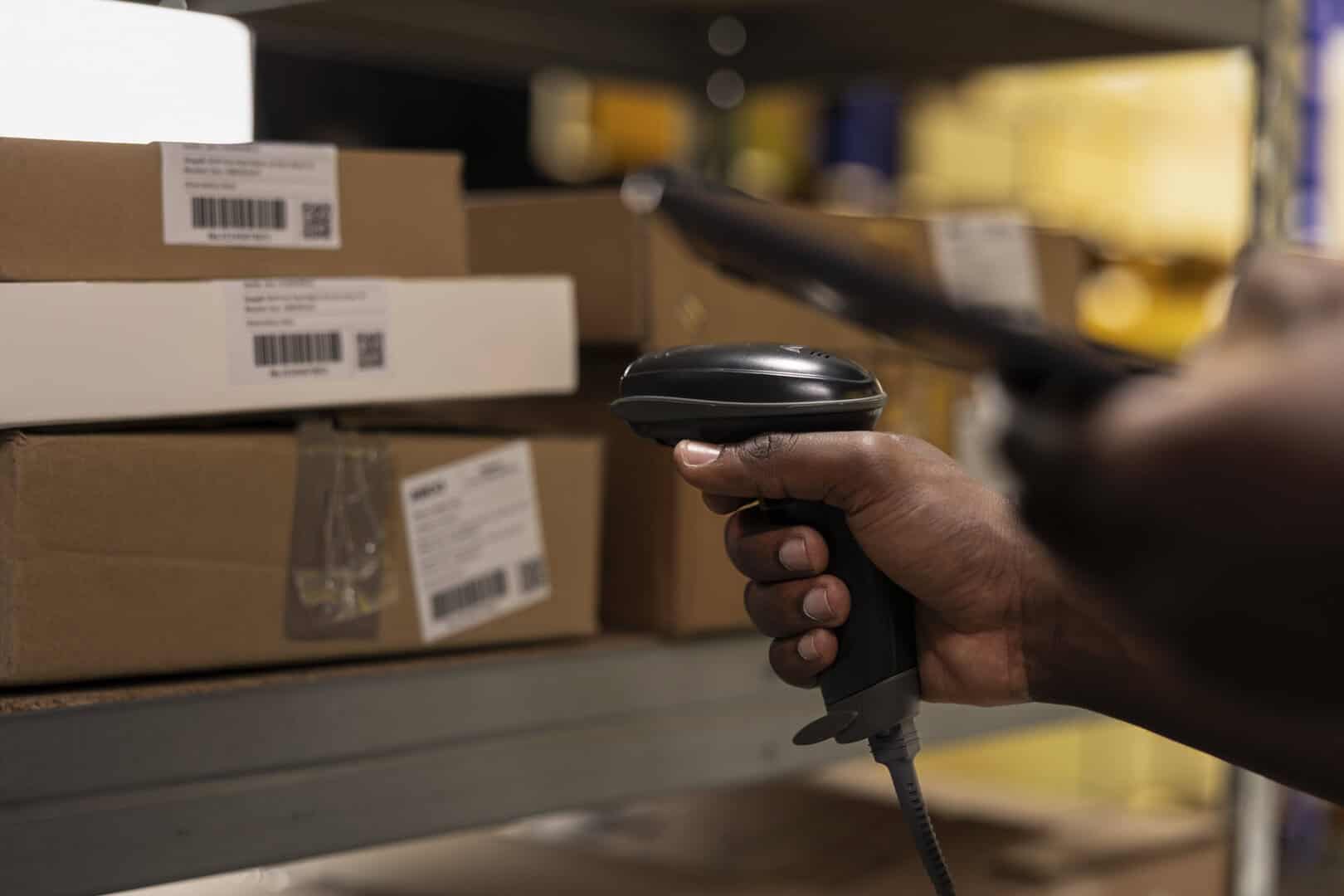
Two-dimensional barcodes are designed to carry more information within a single symbol. Common formats include GS1 DataMatrix and QR Codes enabled with GS1 Digital Link.
Unlike 1D barcodes, 2D barcodes can encode multiple data elements directly, including:
- GTIN
- Lot or batch number
- Serial number
- Expiration date
- URLs and structured product data
This changes how information is captured and used across operations.
One Barcode, Multiple Use Cases
A single GS1-compliant 2D barcode can support multiple functions without changing the physical label. The same barcode can be used for:
- Point of sale (POS) scanning
- Point of care (POC) verification in healthcare
- Receiving, picking, and inspection in warehouses
- Consumer access via smartphone
The flexible system eliminates requirements for multiple labels and requires no parallel operations. The system guarantees that product data remains intact from manufacturing through its entire lifecycle until it reaches end-user consumption.
Lowry aligns 2D barcode strategies with broader visibility initiatives. The combination of RFID with IoT sensors and GPS systems enables 2D barcodes to function as part of a complete data collection system. Sonaria unifies multiple data sources into one operational dashboard, which provides teams with dependable information for their decision-making process.
GS1 Sunrise 2027: The Catalyst for Migration
The flexible system eliminates requirements for multiple labels and requires no parallel operations. The system guarantees that product data remains intact from manufacturing through its entire lifecycle until it reaches end-user consumption.
Lowry aligns 2D barcode strategies with broader visibility initiatives. The combination of RFID with IoT sensors and GPS logistics enables 2D barcodes to function as part of a complete data collection system. Sonaria unifies multiple data sources into one operational dashboard, which provides teams with dependable information for their decision-making process.
What Migration Really Means
Migration is often misunderstood as a simple scanner upgrade. In reality, it touches multiple layers of an organization’s operation, including:
- Scanner and mobile device capabilities
- POS, POC, and backend software updates
- Label and packaging design
- Data governance and standards alignment
From Lowry’s perspective, migration success depends less on barcode readability and more on system integration. If scanners can read a 2D barcode, but backend systems cannot process or use the data, the operational value is limited.
Early planning allows organizations to align technology, data structures, and workflows before 2D barcodes become operationally mandatory.
Recall Speed Is Now a Business Risk, Not a Regulatory Task
Recalls are becoming more frequent across industries, particularly in food, healthcare, and consumer goods. At the same time, they are more visible. News spreads quickly, and consumers expect fast, precise action.
Delays in recall execution increase both financial exposure and brand damage. Broad product pulls, often used when data is incomplete, are expensive and disruptive.
2D barcodes change recall dynamics by enabling immediate identification of affected products at the lot or serial level. Instead of removing all similar items, organizations can target only those products that are truly impacted.
Lowry has seen the value of structured barcode data firsthand. In healthcare and manufacturing environments, customers already rely on detailed identification data to support recall readiness, compliance audits, and patient or product safety initiatives. The same principles apply across retail and logistics.
2D Barcodes Reduce Process Complexity at the Edge
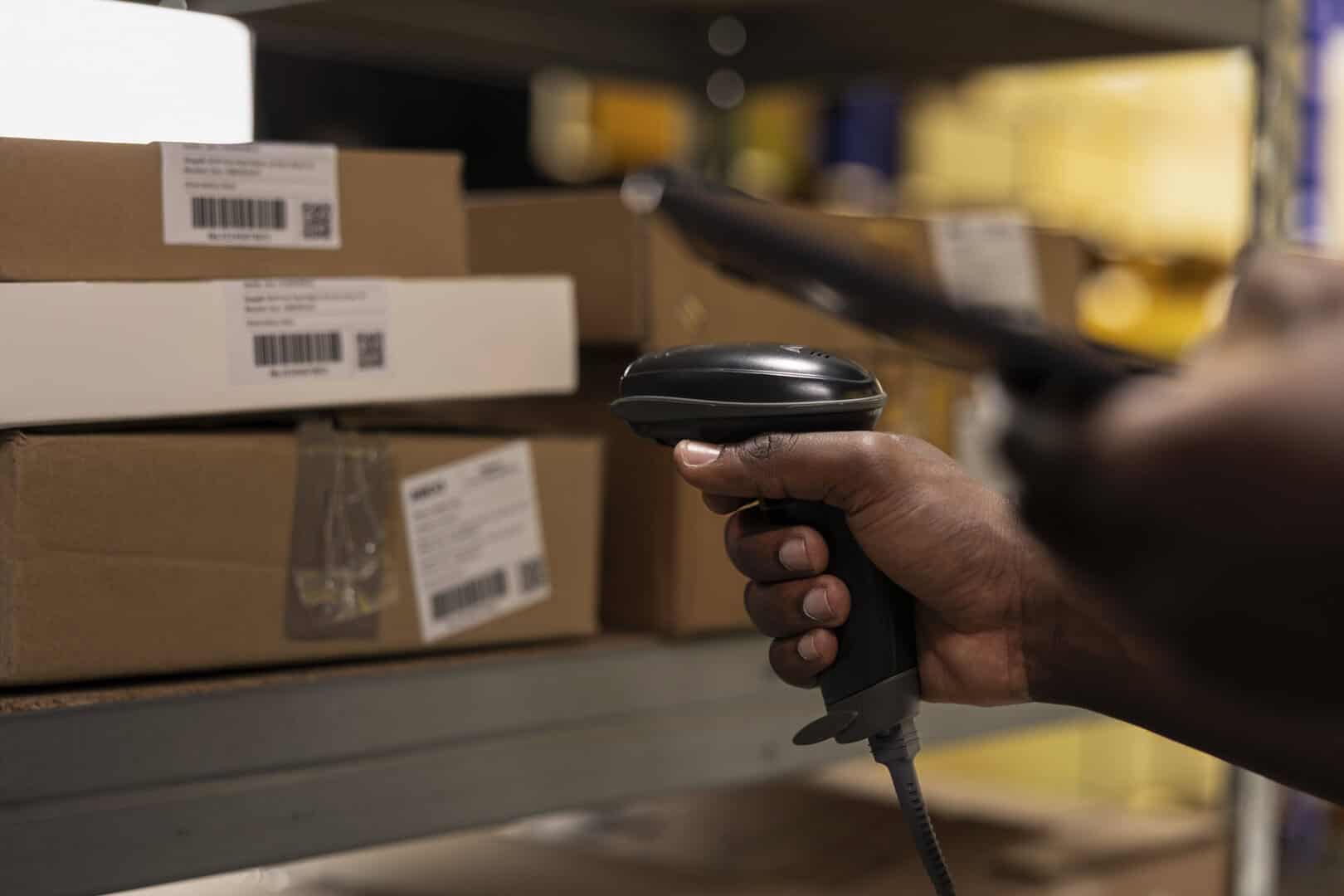
Frontline workers operate under constant time pressure. Whether they are receiving goods, picking orders, verifying medications, or inspecting components, every extra step matters.
With 1D barcodes, workflows often require multiple scans or manual lookups to gather all necessary information. This slows processes and increases the likelihood of mistakes.
2D barcodes simplify edge workflows by consolidating data into a single scan. Receiving teams can capture product ID, lot, and expiration data at once. Inspectors can verify compliance without switching systems. Healthcare staff can confirm the right product for the right patient with fewer steps.
Lowry’s enterprise mobility experience shows that when 2D scanning is paired with properly managed mobile devices and MDM, training time decreases and error rates drop. Simpler workflows lead to faster adoption and more consistent execution.
Migration Enables Better Use of Existing Systems
Many organizations already have ERP, WMS, and inventory management platforms capable of handling richer data models. The limitation is often not the software itself, but how data is captured at the edge.
When only a GTIN is scanned, systems cannot act on lot-level or serial-level information, even if they are designed to support it. This leaves functionality unused and limits return on existing investments.
2D barcodes unlock the value of systems already in place by feeding them higher-quality data. Instead of redesigning enterprise platforms, organizations can enhance data inputs and workflows to achieve better outcomes.
Lowry’s Sonaria platform acts as a translation layer between barcode data and enterprise systems. It normalizes inputs, applies business rules, and ensures that data flows consistently across environments.
2D Barcodes and RFID Are Part of the Same Roadmap
The decision-making processes within organizations show their preference for choosing between barcode technology and RFID technology. Companies with advanced operational capabilities use both systems as part of their daily business activities. Barcodes provide a budget-friendly solution that businesses widely accept as a standard method of operation.
RFID technology enables businesses to track their assets through automated systems, which do not require direct visual contact during operations. Organizations use 2D barcode migration as a method to establish standardized data models that help them implement both systems. The organization can implement RFID and IoT sensors together with GPS tracking systems as an extension of its existing strategy when its data structures become fully integrated.
Lowry uses a technology-agnostic framework to choose appropriate tools that match different use cases and operational settings, and expected business returns.
How Lowry Solutions Makes 2D Barcode Migration Practical
Lowry Solutions approaches 2D barcode migration as an operational program, not a one-time project. The process begins with understanding how data is used today and where gaps exist.
Support includes:
- Barcode and scanner capability assessments
- Printer, label, and supply optimization
- Software integration with ERP, WMS, and Sonaria
- Workflow design, training, and change management
- Lifecycle management and ongoing support
Lowry achieves its unique value proposition through its complete management of all company operations. The company achieves operational success through its complete control of hardware and software and service operations for migration projects.
Conclusion: 2D Barcode Migration Is an Operational Advantage
The performance of an organization depends on the data that needs to be brought through 2D barcodes for its operational activities. Organizations achieve better operational outcomes when they collect more detailed information during customer interactions. The current shift extends beyond standard compliance requirements. The current transformation process needs to create systems that enable organizations to achieve complete operational transparency while maintaining safety and building trust across their operations.
The intentional migration process enables organizations to create systems that provide them with sustainable operational efficiency and business resilience. Lowry Solutions uses its extensive knowledge of barcode systems and RFID technology, plus enterprise tracking systems, to help organizations achieve financial returns through their transition to 2D barcode technology.
You need to understand the role that 2D barcodes play within your business operations. Lowry Solutions will help you evaluate your current situation and develop a detailed plan for 2D barcode migration execution.
Frequently Asked Questions
They are not replacing them immediately, but they support richer data needed for modern operations.
No. They complement RFID and often work together in mature tracking strategies.
Typically, scanners, some software components, and labeling processes.
It connects barcodes to structured data and web-based information using GS1 standards.
By assessing infrastructure, aligning standards, and designing practical, scalable workflows.

A Horizons Talent Alumnus and Microsoft Certified Systems Engineer (MCSE), the author brings a proven track record of success in senior shared-services leadership roles within large, complex multinational organizations, particularly in the manufacturing sector.
With deep experience at Senior Manager level, they have led strategic customer relationships by understanding core business imperatives, shaping service and solution propositions, and delivering measurable business outcomes.