
Brighton, MI – January 19, 2015 – Lowry Solutions, a leading enterprise mobility solutions provider and systems integrator of barcode and RFID data collection solutions, has announced that Paula Peterson graduated from the Vehicle Supply Chain Management certificate program offered by Wayne State University and the Automotive Industry Action Group (AIAG).
Peterson, Lowry Solutions’ Business Development Account Executive, enrolled in the year-long program in order to gain a thorough understanding of supply chain management (SCM) concepts and issues in the context of the automotive industry.
“We have clients in the automotive industry, and our goal is to help them streamline their supply chain operations,” Peterson said. “This was a fantastic opportunity for me, and I will use what I learned to better help our customers.”
With the focus on the vehicle industry, participants in the program learned about SCM finance and strategy, negotiations, forecasting, production operations, risk management, and more. Peterson also learned about automotive supply chain issues, such as purchasing and supplier development, after-market parts management, and inbound logistics.
“At Lowry, we are always excited to see employees take steps to broaden their knowledge or continue their education,” said Michael Lowry, President and CEO of Lowry Solutions. “With her incredible work ethic and desire to learn, Paula has long been a valuable part of Lowry Solutions, and it looks like that trend will continue.”
Meetings for the program were held at AIAG headquarters in Southfield, Michigan, and featured both academic and industry faculty. In addition to the certificate, Peterson was offered three hours of college credit for the course and a $2,000 scholarship toward Wayne State University’s MBA program.
Revealing the Value of Information in an Automotive Supply Chain
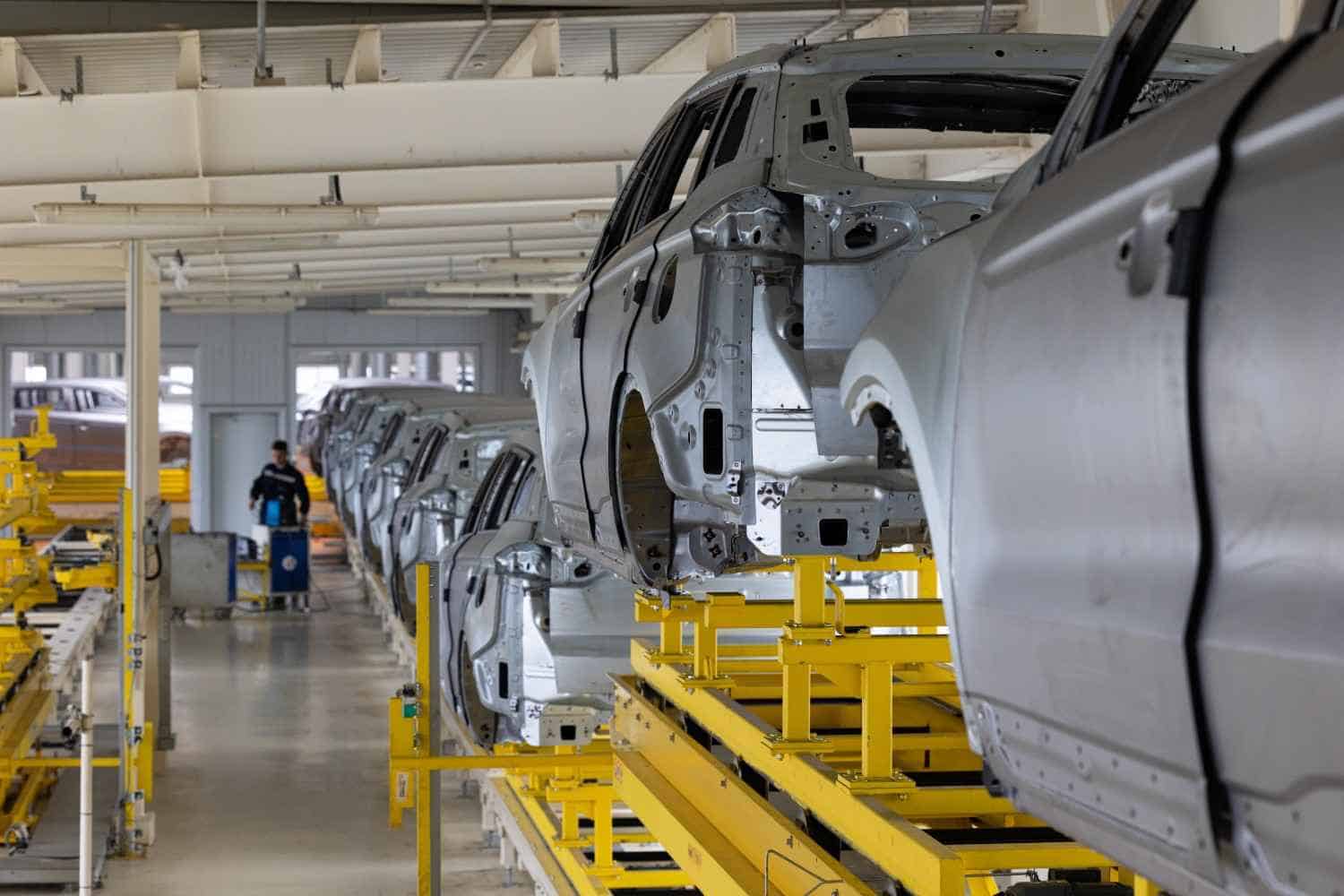
The car industry is among the most intricately interconnected ecosystems on Earth in terms of supply chains. Practically thousands of parts from suppliers around the world have to come into perfect alignment with production schedules at factories.
Production plans go awry when inventories are unavailable, transport takes too long, or tracking information fails to live up to reality – all of these challenges cause unwanted operational costs.
And so professionals who fully understand the automotive supply chain are much better positioned to capitalize on opportunities to improve visibility, eliminate waste and drive continuous operational improvement.
Bridging Industry Knowledge with Technology
Deep operational knowledge dramatically increases the return on technology investment. When they know how you manufacture, procure, keep inventory, and provide logistics, they advise solutions that address actual business issues rather than switch out legacy systems.
For instance, when organizations deploy a barcode or RFID system, they commonly find advantages in assessing more encompassing workflow improvements, such as:
- Automated inventory tracking
- Work-in-progress visibility
- Supplier collaboration
- Warehouse optimization
- Production scheduling
- Asset utilization
- Quality assurance processes
Solutions with proven capabilities, combined with technology that deliver tangible results throughout the supply chain.
Supporting Lean Manufacturing Initiatives
Manufacturers continually seek ways to eliminate waste while improving production efficiency. Professionals with supply chain expertise understand how technology can support lean manufacturing principles by providing accurate, real-time operational data.
Integrated tracking solutions help organizations:
- Reduce manual data collection
- Improve material flow
- Minimize production delays
- Increase inventory accuracy
- Monitor work-in-progress
- Improve equipment utilization
These improvements contribute to more predictable production schedules while helping manufacturers respond quickly to changing customer demand.
Strengthening Supplier Collaboration
Modern supply chains depend on strong relationships between manufacturers and suppliers. Visibility into inventory levels, shipment status, and production requirements enables organizations to coordinate activities more effectively.
Technology solutions that support supplier collaboration include:
Solution | Business Benefit |
Barcode Tracking | Accurate material identification |
RFID Technology | Automated inventory visibility |
Enterprise Mobility | Real-time warehouse communication |
Electronic Data Integration | Faster information exchange |
Asset Tracking | Improved equipment accountability |
Improved collaboration helps reduce delays, improve forecasting, and strengthen overall supply chain performance.
Adapting to Industry Challenges
Global supply chains continue to face evolving challenges, including fluctuating demand, labor shortages, transportation disruptions, and increasing customer expectations.
Organizations must continuously evaluate new strategies for improving resilience through better planning and greater operational visibility.
Technology plays an important role by enabling businesses to:
- Monitor inventory in real time
- Improve shipment tracking
- Automate repetitive processes
- Analyze operational performance
- Respond quickly to unexpected disruptions
Professionals with current industry knowledge can help organizations navigate these challenges while identifying practical opportunities for improvement.
Building Customer-Centered Solutions

Every organization operates with unique workflows, production environments, and business objectives. As a result, successful technology implementations require more than standardized solutions.
Industry knowledge enables solution providers to better understand customer requirements before recommending technologies that align with specific operational goals.
Rather than focusing solely on hardware, organizations benefit from solutions that consider:
- Existing infrastructure
- Business processes
- Workforce requirements
- Growth plans
- Regulatory obligations
- Long-term scalability
This consultative approach helps ensure technology investments deliver sustainable business value.
The Value of Cross-Functional Expertise
Supply chain management has many business functions, such as procurement, manufacturing, warehousing, logistics, finance, and information technology.
Professionals who grasp this interplay between the processes can pinpoint these avenues where integrated technology translates to superior efficiencies across departments.
An example of this could be data from inventory tracking, which would serve not only procurement planning but also production scheduling, financial reporting, and customer service. Having this expanded view allows companies to make better business decisions through real-time data.
Investing in Workforce Development
Lifelong learning not only empowers individual careers but also enhances organizational capabilities. Help your business stay competitive in these fast-changing markets by encouraging employees to take on professional certifications, industry training, and/or advanced education.
The following advantages are of continuous professional development:
- Expanded technical expertise
- Stronger customer relationships
- Improved problem-solving skills
- Better project planning
- Greater innovation
- Increased adaptability to emerging technologies
Investing in employee learning gives organizations teams that deliver better quality solutions, along with stronger prospects for sustainable business growth.
Technology Continues to Shape Supply Chain Operations
The advent of emerging technologies is still changing supply chain management by enhancing visibility, automation, and decision-making.
- RFID systems
- Barcode automation
- Enterprise mobility
- IoT sensors
- GPS tracking
- Predictive analytics
- Cloud-based management platforms
- Artificial intelligence
Such technologies can give an organization deeper insights into its operations as well as enable faster, data-driven decisions across the supply chain.
How Lowry Solutions Supports Supply Chain Innovation
Supply chain solutions are not purely about technology but rather come from a deep understanding of how the operations in and out of the industry work. Lowry Solutions Inc. combines decades of experience with enterprise mobility, barcode technology, RFID, industrial printing, asset tracking and inventory management, as well as IoT expertise to empower organizations with operational efficiency in managing the complexities of a supply chain.
Lowry delivers real-time visibility across inventory, assets, and production simply through its patented Sonaria platform, integrated hardware solutions, professional services, and system integration to manufacturers, logistics operations & distributors. It enables organizations to automate their workflows, get better inventory accuracy, enhance traceability, and use data for operational decisions!
What Will Supply Chain Management Be Like For The Next Generation
Supply chains are so interconnected that organizations need professionals with competence in enabling technologies besides operational strategy. Continuous training also ensures teams are prepared to face the new challenges of their business in innovative ways.
It can be expected that organizations with one foot in their industry experience and another in advanced tracking technologies will build better, faster, scalable supply chains fit for long-term growth. When used with investments around employee development and integrated technology solutions, these insights enable continuous improvement: the foundation of sustainable success in any market.
To learn more about Lowry Solutions and their services, visit www.lowrysolutions.com.
About Lowry Solutions, Inc.
Since 1974, Lowry Solutions, Inc. (formerly Lowry Computer Products) has helped its customers make informed business decisions and become more competitive in the marketplace. The company provides the most innovative barcode, RFID, biometrics, enterprise mobility, asset management, and inventory control solutions that reduce operational costs, heighten productivity, and improve process efficiency in an array of vertical markets. Its enterprise mobility solutions empower the mobile worker through real-time communication and data access solutions. See more at www.lowrysolutions.com.

A Horizons Talent Alumnus and Microsoft Certified Systems Engineer (MCSE), the author brings a proven track record of success in senior shared-services leadership roles within large, complex multinational organizations, particularly in the manufacturing sector.
With deep experience at Senior Manager level, they have led strategic customer relationships by understanding core business imperatives, shaping service and solution propositions, and delivering measurable business outcomes.