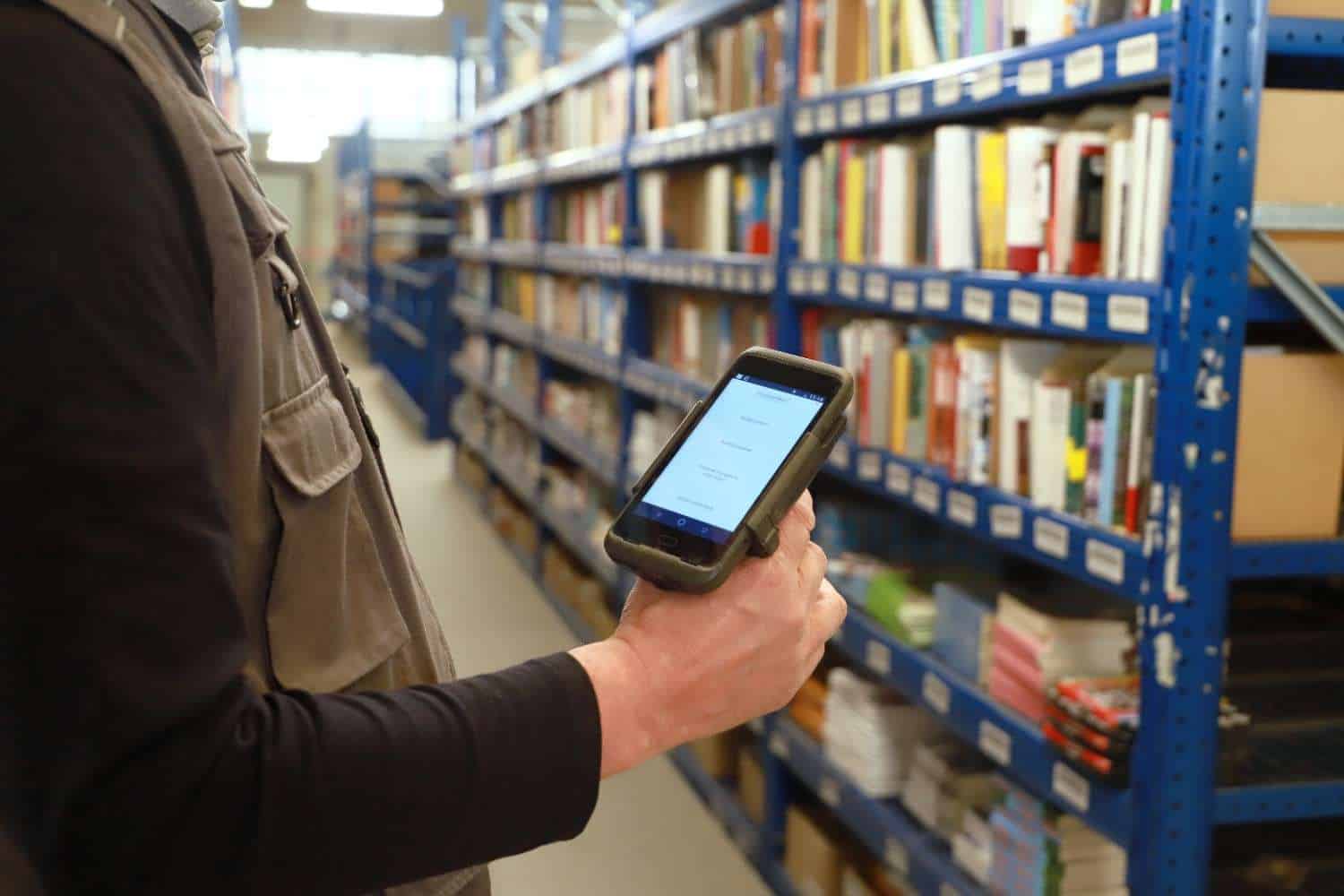
| Summary: Today’s inventory management necessities demand real-time visibility throughout the complex supply chains. This guide discusses the advantages of using technologies such as barcodes, RFID, and IoT in terms of improving accuracy and automating tracking, as well as reducing errors. Lowry Solutions is a company that integrates these technologies, thereby helping enterprises attain compliance, do proper asset optimization and decision-making, and gain end-to-end inventory visibility through unified, scalable solutions in a worldwide operation efficiently. |
Inventory visibility is no longer a “nice to have.” In the present-day supply chains, it is the basis of operational efficiency, cost management, and customer satisfaction. The businesses that are aware of their inventory status completely, the location, and its movement, make quicker and more informed decisions. On the other side, when there is a lack of knowledge, the outcome is usually stockouts, surplus inventory, order delays, and unhappy customers.
The supply chains of today are moving at a faster pace, being more distributed, and also having much more complexity than before. Warehouses, on the other hand, are now having more locations than ever, hence their distribution. Inventory is constantly moving between (facilities, suppliers, customers, and third-party partners). Moreover, customer expectations have risen. They demand faster shipping, accurate delivery, and full tracking of their orders at all times.
This guide outlines the different ways businesses can adopt barcoding, RFID, and IoT-based tracking to the extent of revolutionizing their inventory management system. It emphasizes practical implementation, real operational gains, and real-world cases while dispelling any theoretical concepts.
Understanding Current Challenges in Inventory Management

Before selecting technology, it is important to understand the problems modern inventory teams face.
Operational Challenges
Many organizations still struggle with basic inventory issues:
- Stockouts that interrupt production or delay customer orders
- Overstocking that ties up capital and increases carrying costs
- Manual data entry errors that lead to inaccurate system records can cause businesses to lose an average of $1.1 trillion globally each year
- Misplaced items that require time-consuming searches
When inventory data is outdated or unreliable, teams compensate by adding buffer stock or manual checks. This increases cost and reduces efficiency.
Supply Chain Complexity
In today’s world, companies have the flexibility to manage their inventory in different locations. They have to deal with:
- Several warehouses and distribution centers
- International supply chains, along with suppliers and partners
- Omni-channels of inventory supporting retail, e-commerce, and direct fulfillment
When there is no central visibility, the inventory data gets split into parts. The various teams could be aware of the stock at a particular location but not be aware of it all over the network.
Regulatory and Compliance Pressures
In sectors like healthcare, food, automotive, and government, inventory tracking is a compliance-related issue from the very beginning.
- The FDA and ISO rules demand that companies maintain traceability and be audit-ready at all times
- As well as that, serialized tracking is important for recalls and inspections
- Then, accurate labeling and documentation are required
On top of that, manual or unintegrated systems become the main reasons for compliance risk and delayed response times.
Data and Visibility Gaps
Perhaps the most common issue is the lack of real-time insight. Many organizations rely on batch updates or end-of-day reports. This creates blind spots:
- Inventory changes between updates are not visible
- Predictive planning becomes difficult
- Decision-making is reactive instead of proactive
Technology-Based Inventory Tracking Solutions

Modern inventory management relies on selecting the right technology, or combination of technologies, based on operational needs. Barcodes, RFID, and IoT each play a distinct role.
A. Barcode-Based Tracking
Barcodes remain one of the most widely used and reliable inventory tracking technologies.
Solutions Provided
Lowry Solutions delivers industrial-grade barcode system for inventory designed for enterprise environments. This includes:
- Desktop, mobile, and print-and-apply barcode printers
- Industrial labels and ribbons that can resist harsh conditions,
- Handheld and fixed barcode scanners for different applications like warehouse, manufacturing, and field work.
The main purpose of these solutions is to provide operations with traceability, consistency, and uptime.
Functional Highlights
- Keeps a record of raw materials, work-in-progress (WIP), finished goods, and fixed assets
- Assists with enterprise and field deployments that utilize rugged mobile devices
- Facilitates the efficient working processes for receiving, shipping, cycle counting, and point-of-sale scanning
Barcodes facilitate a systematic and repeatable process that lessens the need for manual input.
Benefits
Barcode tracking is cost-effective and dependable. It improves accuracy, reduces human error, and provides immediate inventory visibility at scan points. For many organizations, barcodes are the foundation of inventory control.
B. RFID
RFID builds on barcode tracking by enabling automatic, real-time visibility without line-of-sight scanning.
Solutions Provided
Lowry Solutions offers a full RFID ecosystem, including:
- UHF RFID tags and labels
- RFID printers and encoders
- Handheld and fixed RFID readers
- Middleware software that connects RFID data to enterprise systems
Functional Highlights
- Middleware processes real-time tag events, such as items entering or exiting zones
- Integrates with ERP and WMS platforms to keep records current
- Supports advanced filtering, location mapping, and centralized device management
- Enables mobile and web-based visibility across facilities
RFID systems can scan hundreds of items simultaneously, significantly reducing counting time.
Benefits
RFID gives nearly real-time stock monitoring, quicker counts, better use of assets, and fewer mistakes. It does the manual scanning of each item and provides large-scale automation support.
Use Cases
- Manufacturing: Work in progress (WIP) monitoring and direct marking of parts
- Logistics: Monitoring of pallets, containers, and shipments
- Government and automotive: Traceability of assets and adherence to regulations
- Management of returnable assets
C. IoT-Enabled Asset and Inventory Tracking
The tracking system based on IoT is the highest degree of inventory visibility.
Solutions Provided
Lowry Solutions integrates IoT devices, intermediaries, and cloud-driven displays with its Sonaria platform to provide combined inventory and asset tracking.
Functional Highlights
- Integrates barcode, RFID, BLE, GPS, and IoT sensors in one system
- Gives a view of the situation instantly in all the locations of the company and during transport
- Bring in the automated alerts, dynamic workflows, and predictive analytics
- Supports 90%+ accuracy of inventory with the help of Tier 1, 2, and 3, which is proactive
IoT makes it possible to monitor not only warehouses but also fleets, tools, and high-value mobile assets.
Benefits
- The processes involving manual labor were minimized, and the inventory processes became faster
- More efficient use of the assets and loss reduction
- Real-time observations are given simultaneously to several places
- More accurate planning due to the implementation of predictive analytics
Use Cases
- High-value or sensitive assets
- Multi-warehouse inventory environments
- Fleet and in-transit tracking
- End-to-end supply chain optimization
Best Practices for Inventory Tracking Implementation

Technology alone cannot solve the problem of inventory issues. The successful application of technology requires careful planning, setting up standard procedures, and combining the different components involved.
Commence with Inventory Assessment and Workflow Mapping
First, do a comprehensive audit of all the stocks and assets. Know what kind of stocks there are, how they move, and who takes care of them. Create a workflow of receiving, storage, production, shipping, and returns. Thus, technology will be in sync with the actual operations.
Choose the Right Technology Mix
Different environments call for a variety of tools:
- Barcodes are suitable for organized, cheap tracking
- RFID helps with automation, mass scanning, and monitoring of assets throughout their entire lifespan
- IoT provides instantaneous visibility and forecasts
The majority of companies gain an advantage from all three types of technology together.
Standardize Processes and Labeling
There is a necessity for uniformity in labeling formats, positions, and scanning methods. The compatibility of devices, locations, and systems is granted by standardization.
Integrate with ERP and WMS Systems
The data regarding inventory needs to be pushed to the corporate systems quickly. Integration gives the possibility of having automated reporting, replenishment, and maintenance scheduling.
Train Staff and Reinforce Best Practices
Proper training is the basis of getting the right results. Education at all times is the way to have teams in agreement with the processes and updates in technology.
Monitor, Alert, and Audit
Low stock, abnormal movement, or no longer needed maintenance are all flagged by automated alerts. The physical and system inventory is kept aligned by regular audits.
Measure ROI and Improve Continuously
Track KPIs such as accuracy, labor savings, shrinkage reduction, and utilization. Platforms like Sonaria provide dashboards to support continuous improvement.
A Smarter Way to Manage Inventory
The modern era of inventory management is no longer about selecting a single technology. It is combining the barcodes, RFID, and the Internet of Things into a unified system that delivers precise and fast visibility to the users.
Platforms such as Sonaria have the power of these technologies and their benefits, such as improved decision-making, automation of processes, and quantifiable gains in the performance of operations, which is a significant advantage. It deals with the integration of barcodes, RFID, and IoT into one system that provides accurate, real-time visibility throughout the whole system.
If your goal is to make your inventory operations more accurate, to get rid of tracking gaps, and to modernize your inventory operations, then you should definitely reach out to Lowry Solutions. You can ask for a demo, book a consultation, or let us work with you in creating a tailor-made barcode, RFID, or IoT solution that would be perfect for your business.
FAQs
The difference is that barcodes need line-of-sight scanning while RFID allows automatic scanning of a large number of items without the need for direct visibility.
IoT extends RFID by adding real-time monitoring, analytics, and in-transit visibility.
Properly implemented IoT tracking can give more than a 90% inventory accuracy.
They can work together. Sonaria is one of the platforms that offers a unified system to incorporate all three technologies.
Assessment, technology selection, deployment, integration, training, and ongoing support will be done by Lowry Solutions.

A Horizons Talent Alumnus and Microsoft Certified Systems Engineer (MCSE), the author brings a proven track record of success in senior shared-services leadership roles within large, complex multinational organizations, particularly in the manufacturing sector.
With deep experience at Senior Manager level, they have led strategic customer relationships by understanding core business imperatives, shaping service and solution propositions, and delivering measurable business outcomes.