
Summary: The article describes how RFID technology functions, the dangers of skimming, and whether an RFID blocking card would keep you safe. It sheds light on the science of protection, the results of actual tests on the efficiency of those blocking cards, other possibilities, such as card security built-in or RFID wallets, and common misconceptions about the given threat. Lowry Solutions helps cut through the confusion by offering complete RFID security strategies. From securing payment cards and ID badges up to locking down enterprise systems, Lowry offers tried-and-true solutions that strike a great balance between convenience and high-end security. |
RFID is used in several up-to-date techniques, including passports, employee badges, and payment cards, to facilitate swifter access or faster transactions. However, the threat of unauthorized access arises if someone uses an unauthorized scanner to intercept the same signals. Hence, there has been quite a surge in demand for RFID-blocking wallets, sleeves, and cards.
They make the simple pledge to prevent the covert skimming of personal data. But how effective are they in practice?
This article examines how RFID works, the risks of skimming, and whether RFID blocking cards and related products provide genuine protection or simply reassurance.
What are RFID & RFID Blocking Cards?
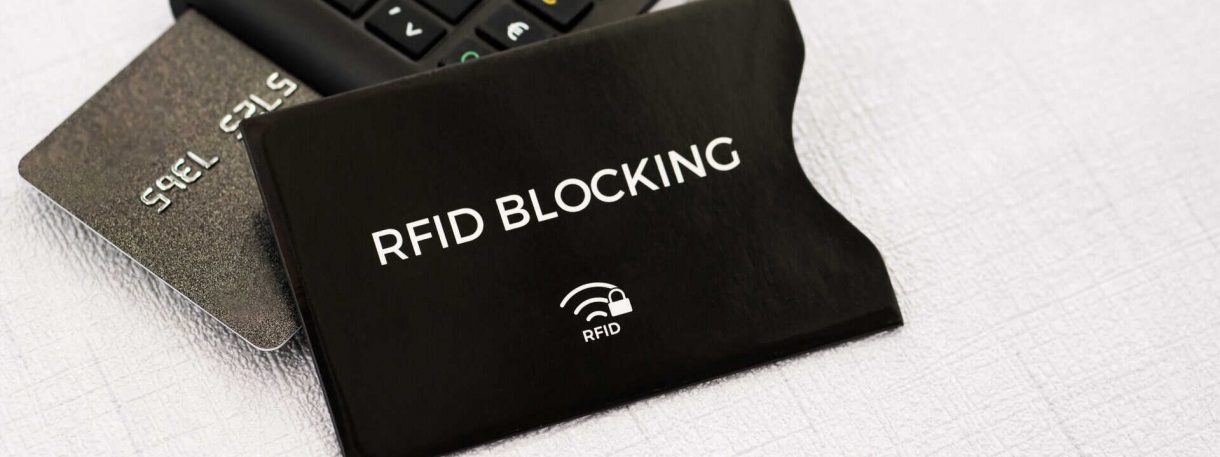
Radio frequency identification is a technology that transmits recorded data through radio waves. The RFID system consists of a single tag with a microchip and antenna, detected by a reader that converts the signal into legible data. It enables tracking and quick item detection without physical contact.
RFID Blocking Cards
RFID blocking cards prevent unwanted access to your RFID-enabled devices. By creating interference, an RFID blocker prevents a tag from communicating with an RFID reader. It safeguards your payment card information in this way.
These cards are the same size as an ordinary credit card and can be stored in your wallet next to your RFID cards. They are convenient for people who fear RFID skimming, in which unauthorized scanners steal info from your RFID-enabled cards without you even realizing it.
Are RFID Blocking Cards Effective?
Many consider that RFID blockers are capable of preventing an unwanted RFID scanning. They appear to enclose your cards in a protective shell so a scanner cannot read and steal their data.
Yet it’s best to use high-quality RFID-blocking cards constructed from robust, dependable materials to maximize protection. As with any defense tool, their function may deteriorate when used, so replacing them now and then is advisable.
Let’s examine RFID card skimming—how it works, how blocking cards function, and why they matter.
The Real Threat of RFID Skimming
RFID skimming refers to any act where a hidden device secretly scans data off your card without consent. The concept is simple: If a payment terminal can detect your card, some malicious device can also detect it. The new age of so-called contactless payments has aggravated the phenomenon. However, the actual risk in most everyday situations is far less than many people tend to assume.
Actual Risk Assessment
- Feasibility: While skimming is possible, it requires specific equipment that isn’t usually used on a regular basis.
- Encryption: However, these cards are more secure because they incorporate dynamic encryption and EMV chip technology, making copying or using stolen information difficult.
- Weak Targets: An older access badge, legacy system, or hotel card without encryption is still more vulnerable to unauthorized reads.
However, the threat is not zero. Large-scale theft through RFID skimming is less widespread than some urban legends suggest.
Do RFID Blocking Cards Actually Work

Using RFID blocking cards is a simple way to stop electronic pickpocketing. When you put one in your wallet, it is supposed to avoid hidden scanners from reading cards that are close by. We must examine how they function and how effectively they perform in real-world situations to appreciate their worth.
The Science Behind Blocking
RFID-blocking cards function by interfering with the signals that readers emit through electromagnetic shielding. By absorbing or deflecting radio waves, the shielding prevents the chip within your card from ever communicating with the scanner, much like a Faraday cage.
Key points:
- Shielding principle: Conductive layers or resonant circuits within the blocking card deflect or absorb radio signals.
- Frequency focus:
- 13.56 MHz (High Frequency) – standard for modern contactless credit/debit cards, passports, and many employee IDs.
- 125 kHz (Low Frequency) – used in older access cards and legacy RFID systems.
- Design requirement: Effective blockers must be tuned to the specific frequency of the card they protect to ensure reliable shielding.
Effectiveness in Practice
Testing in both the lab and the real world demonstrates that performance varies according to the blocking card’s quality and the reader it encounters.
Key findings:
- High-quality blocking cards:
- Successfully stops unwanted readings at 13.56 MHz.
- Efficient in common consumer settings, including corporate ID access points, hotel key systems, and payment terminals.
- Low-cost or poorly manufactured blockers:
- It may block weaker scanners but fails against readers with stronger antennas or amplified power.
- Independent testing:
- ZDNET’s tests using a Flipper Zero device confirmed that a quality blocking card prevented unauthorized debit card scans.
- Particularly for more powerful readers, low-quality substitutes showed erratic protection.
RFID blocking cards are technically effective when properly designed. Their performance depends on material quality, frequency tuning, and placement relative to the protected card. While high-quality blockers can reliably prevent casual scans, lower-end products may offer only partial protection.
Alternatives to RFID Blocking Cards
There are alternative methods of protecting your data that are frequently more dependable or complementary, even if RFID blocking cards offer additional security.
Built-In Card Protections
Modern financial institutions design contactless cards with a multitude of security features:
- Encryption: Even if a card is scanned, the information supplied will be meaningless without the right decryption key because the majority of credit and debit cards have encrypted communication.
- Dynamic CVV or Tokenization: Some cards go one step further by generating a unique code advantage for every transaction, which stops valid information from being taken for use in future transactions.
- Fraud Detection Systems: Banks will keep an eye on unusual transactions and may even step in to prohibit them.
These safeguards lessen the possibility of illegal scanning and reduce the importance of physical blockers in many situations.
Practical Security Measures
Keeping RFID-enabled cards safe does not depend only on blockers. Daily habits and simple precautions go a long way:
- Choose RFID-shielded wallets or purses: Unlike a single blocking card, a shielded wallet protects all cards and IDs inside it.
- Carry only what you need: When in crowded areas or traveling, bring fewer RFID-enabled cards. The less you carry, the lower the chance of exposure.
- Check your accounts often: Review bank and credit card statements regularly. Report any suspicious activity without delay.
- Keep important cards apart: Store high-value cards or badges in separate sections of your wallet instead of stacking them together. This reduces the chance of multiple cards being scanned at once.
Combining Layers of Protection
No one method alone offers complete protection. The second-best choice implies using what security measures are integrated into contemporary cards, overseeing one’s accounts, and adopting good habits, especially in environments that rely on an RFID asset tracking system. An RFID blocking card or wallet would provide another line of defense; however, these work best when coupled with other safety measures.
Common Myths About RFID Blocking
RFID blocking products have become quite popular these days, and many misconceptions are cropping up each day. Many of these myths tend to hype the risk or take for granted how RFID actually operates. One may distinguish between real worries and marketing ploys by being aware of the facts.
Myth: All RFID cards are unsafe
Reality: Most current payment cards employ EMV encryption and dynamic codes. A successful transaction cannot be approved using the information, even after scanning. Although legacy systems or older access cards are more susceptible, not all RFID technology is equally hazardous.
Myth: Blocking cards guarantees 100% protection
Reality: The level of protection will be determined by the quality of the card and its placement in the wallet. An expertly made card could work in an ideal situation, but it is never 100 percent guaranteed. The best security always involves practicing safe behavior and monitoring your accounts regularly.
Myth: Criminals will easily copy your card after scanning
Reality: Even if an individual records information from an RFID card, most contemporary cards have special, temporary transaction codes. This leaves the pilfered information generally useless for making purchases.
Myth: Credit cards alone require RFID protection
Reality: Access badges, transit cards, and even passports incorporate RFID. Though the risks vary, being irresponsible with any RFID-loaded item can subject you to inconvenience or misuse.
Do You Really Need RFID Blocking? Ask Lowry!
RFID speeds up and simplifies routine operations, including asset tracking, access, and payments. But with convenience comes risk. Without the right protection, sensitive information could be exposed. That’s where Lowry Solutions comes in. We help businesses and individuals secure their RFID-enabled cards and systems without slowing down operations.
- Custom RFID Solutions: We create systems that match your requirements, integrate easily with existing infrastructure, and reduce security vulnerabilities.
- Complete Support: We keep your systems secure and running smoothly from installation through continuing monitoring.
- Safety & Protection: We advise on hands-on actions such as RFID-blocking wallets, cards, and multi-layered security strategies to prevent skimming attacks.
- Proven Experience: Thousands of businesses rely on us for secure asset tracking, access control, and meeting industry standards.
Businesses and individuals get more than RFID technology with Lowry Solutions. They get trusted protection, intelligent operating design, and assurance knowing sensitive information and assets are protected.
FAQs
Examine all your accounts, keep as few cards as possible, and separate any important ones. It is advisable to use an RFID-blocking wallet for extra protection. Lowry Solutions provides complete RFID security plans for businesses to safeguard both cards and systems.
No. Many blocking cards are designed only for 13.56 MHz signals, covering most bank cards. Access badges or hotel keys may use different frequencies that won’t be blocked. By testing and suggesting the finest tools for your particular needs, Lowry Solutions removes the need for guesswork.
It is typically a matter of only a few centimeters. A criminal would have to be extremely close to your purse or wallet. Admittedly, professional gear might increase the distance fractionally. For excellent security solutions with several protection levels, get in touch with Lowry Solutions.
Yes, in most cases. A shielded wallet protects every card inside, while a single blocking card only covers the cards near it. Businesses and travelers often prefer wallets or badge holders with complete shielding. Lowry Solutions can help you choose between wallets, blocking cards, or custom options.
Not likely. The majority of RFID cards are not readable from across a room, but merely from a few inches away. Still, there’s a small chance of an attempt in crowded places. That’s why it makes sense to use shielding products and stay alert.

A Horizons Talent Alumnus and Microsoft Certified Systems Engineer (MCSE), the author brings a proven track record of success in senior shared-services leadership roles within large, complex multinational organizations, particularly in the manufacturing sector.
With deep experience at Senior Manager level, they have led strategic customer relationships by understanding core business imperatives, shaping service and solution propositions, and delivering measurable business outcomes.