Are you ready for the Internet of Things (IoT)?
Fifty-five percent of U.S. companies are joining the Internet of Things (IoT) in the next 24 months. Is your company among them? We hope your company will be part of the IoT revolution. Ideally, you’re already putting together a scalable plan of action, or you’ll be doing so soon. The resulting benefits will transform the way companies do business and give early adopters a distinct advantage over competitors in operational efficiency, accuracy, and cost-effectiveness. But what does it take to be truly IoT-ready? Do you have a scalable plan for what to do in the next 24 months, and what you might need to do beyond that? At Lowry Solutions, we’ve been helping companies join the IoT by helping them assess their readiness, devise a plan and progression, and take the right steps to get there. We’ve captured many of these insights in our recent webinar that you can download now: Tools to Gain Certainty & Value with IoT. While there’s no recipe for success in IoT, there are best practices you can follow and tools and technologies that will help you make the right choices for your business.
Considerations When Adopting IoT
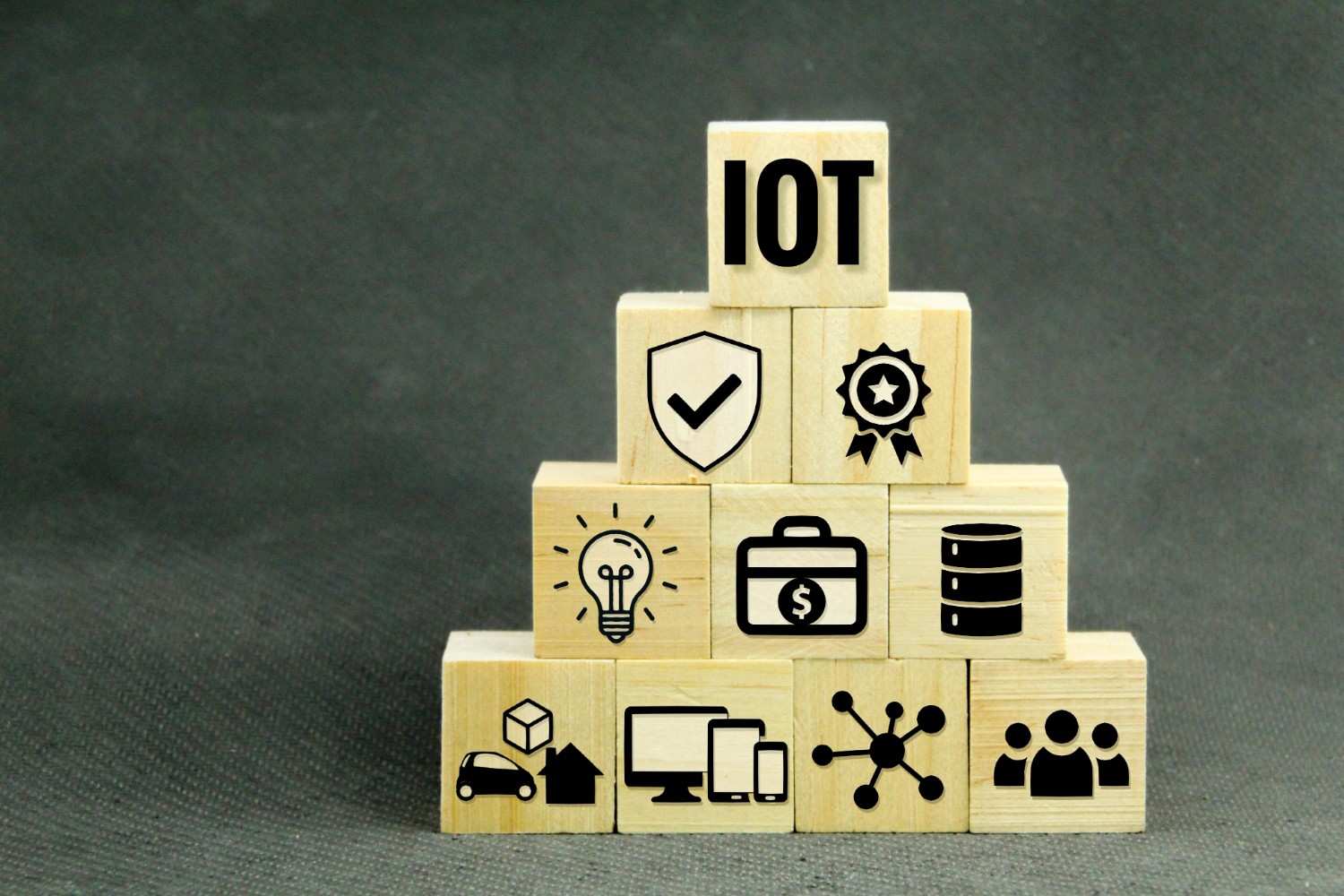
The key considerations you’ll need to keep in mind, and the evaluations you’ll need to make when adopting IoT include:
- Desired Outcomes of IoT Development
- An Assessment of Your Company’s IoT Culture
- A Proper IoT Progression
- IoT Requirements for Your Industry & Business
- Possible IoT Solutions & Investments
- The Importance of Frequency, Technology & Data
- Key Considerations for Standards, Environment & Applications
- Future Change Models, Including Regulations & Compliance
- Tools to Help You Evaluate, Plan & Integrate for IoT
From understanding the organizational culture and commitment required to join the IoT, to understanding what your IoT solution must look like and whether you have the infrastructure to enable it, our webinar offers expert guidance to get you started. The recorded session includes an insightful presentation from John Greaves, one of our RF Solutions Architects at Lowry Solutions, along with answers to key questions during a Q&A with our webinar attendees.
From Learning to Implementation: Turning IoT Knowledge into Business Action
Getting ready for the Internet of Things (IoT) starts long before that first connected device ever goes in. For most organizations, understanding how to employ IoT technology as part of the existing state of affairs at their business is much more luminous than the vision of benefits and value that can be gained through improving operational visibility and automating processes associated with many high-flow IoTs. Webinars are educational resources that allow business leaders, operations teams, and IT professionals to assess their readiness, leverage use case experiences from actual deployments, and create an actionable implementation plan before making big technology investments.
Having an informed approach prevents organizations from tackling complex problems with simple solutions.
Questions Every Organization Should Ask Before Starting
Workflows, infrastructure, and operational goals are unique to each business. Organizations should assess what connected technologies will help them achieve their own aims before embarking on an IoT initiative.
Important planning questions include:
- Which operational processes take up the most time or manual effort?
- What are the inventory or asset visibility gaps occurring?
- Which data is still lacking or difficult to gather?
- To which departments does real-time information gain the most?
- HMU: how success will be measured once implemented
- What legacy systems need to talk with the new IoT technologies?
How well are the current workflows prepared for increased automation?
Answering them early builds an achievable roadmap while ensuring that technology investments are in sync with business priorities.
Understanding Business Challenges Before Selecting Technology
Although not often, one of the biggest myths about IoT projects is that hardware is the first consideration when it comes to selecting. In practice, detecting operational issues must be prioritized before the devices, sensors, or software platforms that support them.
To illustrate, two widely separated business cases in terms of the IoT components needed: an ailing warehouse with inventory variances may need to be more capable in tracking activity, whereas a manufacturer suffering asset downtime will most likely need only condition monitoring and predictive maintenance. Even though both of them are working in IoT, they have different business challenges, and hence their technology requirements are very diverse.
Given that, a structured assessment helps organizations identify:
- Existing operational bottlenecks
- Manual processes suitable for automation
- Areas with limited visibility
- Data collection gaps
- Opportunities to improve efficiency
- Long-term scalability requirements
That is a business-first mentality, where technology comes as the enabler of operational objectives rather than introducing complexity.
Why Education Plays an Important Role in IoT Success
The IoT landscape is always changing with the advent of new devices, communication standards, and enterprise platforms. Doing so keeps organizations up to speed on these developments, allowing them to confidently move forward with their decisions while minimizing risks in implementation.
Webinars with an educational focus are excellent opportunities for:-
- Understand current industry trends.
- See the applications of connected technologies and industries.
- Explore practical implementation strategies.
- Discover common deployment challenges.
- Evaluate available technologies before investing.
- Leverage the experience of Solution Architects.
Organizations that take part in educational sessions come away more informed about the cost-benefit analysis of deploying connected technologies, in terms of both their potential and the responsibilities associated with them.
Learning from Real-World Business Scenarios
One of the greatest advantages of technical webinars is exposure to practical examples that demonstrate how IoT technologies solve operational problems. Rather than focusing exclusively on product features, these discussions often examine complete business workflows and implementation strategies.
Examples may include:
Business Challenge | Potential IoT Application |
Limited inventory visibility | Automated asset and inventory tracking |
Manual warehouse processes | RFID and barcode automation |
Equipment downtime | IoT monitoring and predictive maintenance |
Multiple facility management | Centralized operational visibility |
Asset loss | Real-time location tracking |
Delayed reporting | Automated data collection and analytics |
These examples help organizations understand how similar businesses have approached digital transformation while identifying opportunities applicable to their own operations.
Preparing for Organizational Change
Technology implementation is only one part of IoT adoption. Organizations should also prepare employees, operational processes, and management teams for new ways of working.
Successful adoption often includes:
- Executive sponsorship
- Cross-functional collaboration
- Employee training
- Updated operational procedures
- Defined project ownership
- Ongoing performance evaluation
Preparing the organization alongside the technology helps improve user adoption while ensuring connected solutions deliver measurable business value.
Building Confidence Through Expert Guidance
Many businesses begin their IoT journey with questions about technology selection, integration requirements, infrastructure readiness, and project scalability. Working with experienced solution providers helps organizations navigate these decisions while avoiding common implementation challenges.
Expert guidance can assist with:
- Evaluating operational requirements
- Identifying appropriate tracking technologies
- Assessing infrastructure readiness
- Developing phased implementation plans
- Integrating enterprise software
- Supporting deployment and user training
This collaborative approach reduces uncertainty while helping organizations move forward with greater confidence.
Creating an Implementation Roadmap
Every successful IoT initiative benefits from a structured implementation plan. Rather than attempting a large-scale deployment immediately, many organizations achieve better outcomes through phased adoption that allows technologies to be evaluated, refined, and expanded over time.
A typical roadmap may include:
- Assess current business processes and operational goals.
- Identify high-value opportunities for automation.
- Evaluate infrastructure and integration requirements.
- Select appropriate tracking technologies.
- Conduct a pilot deployment.
- Measure operational improvements.
- Expand successful solutions across additional facilities or departments.
This phased approach allows organizations to validate performance while minimizing operational disruption.
Continuing the Conversation Beyond the Webinar
Educational webinars provide an excellent starting point, but every organization has unique operational requirements that often require deeper evaluation. Follow-up discussions with experienced solution specialists allow businesses to explore specific challenges, review existing workflows, and identify technologies that align with long-term business objectives.
Whether the focus is RFID, barcode systems, enterprise mobility, GPS tracking, IoT sensors, or integrated asset management, personalized consultations help translate educational insights into practical implementation strategies.
Partnering for Long-Term IoT Success
Preparing for IoT is an ongoing process that extends beyond technology selection. As business needs evolve, organizations require solutions that remain scalable, flexible, and capable of integrating with future innovations.
Lowry Solutions supports organizations throughout every stage of this journey by combining enterprise mobility, RFID, barcode technologies, IoT solutions, GPS tracking, and the proprietary Sonaria platform into comprehensive asset and inventory tracking systems. Through professional consulting, system integration, deployment services, and ongoing support, Lowry helps businesses move from planning to implementation with confidence.
By combining educational resources with hands-on expertise, organizations can develop an IoT strategy that not only addresses today’s operational challenges but also establishes a strong foundation for future growth. Learning from industry experts, evaluating business readiness, and creating a well-defined roadmap enables companies to maximize the value of connected technologies while building smarter, more efficient operations for the years ahead.
You can access and download the webinar right now; contact us with any questions or to request a personalized consultation from our team of IoT experts at Lowry Solutions.

A Horizons Talent Alumnus and Microsoft Certified Systems Engineer (MCSE), the author brings a proven track record of success in senior shared-services leadership roles within large, complex multinational organizations, particularly in the manufacturing sector.
With deep experience at Senior Manager level, they have led strategic customer relationships by understanding core business imperatives, shaping service and solution propositions, and delivering measurable business outcomes.