Modern companies often use dated supply chain management technologies, including wired devices acquired through vendors that don’t communicate effectively. These obsolete supply chain management methods cause multiple issues to arise in all areas of the supply chain, from warehouse and distribution management to transportation management, yard management, and labor management. There are too many channels of communication that can get dropped in a supply chain without the proper management tools. The good news is that wireless mobile device costs are becoming increasingly more affordable for businesses like yours.
1. Streamlined, leaner supply chain needed
Challenges in supply chain management include slender margins and additional competitors, shorter product lifecycles, and increased customer expectations. These challenges can be addressed through a lean, streamlined supply chain. Enterprise mobility can help you achieve the ideal supply chain management solution.
2. Enterprise mobility and its impact on supply chain management
Enterprise mobility allows supply chain management personnel to access data and information at any time and from any place. When supply chain managers have information available to them at the tap of a finger, they are easily able to see the problem points that occur in the supply chain and then can work to take the necessary steps to solve the issues. In this way, enterprise mobility increases supply chain functionality and productivity. It also leads to higher levels of employee efficiency. The results lead directly to improved customer satisfaction.
3. Improved visibility and traceability
Supply chain visibility and traceability are vital within today’s market. With new recall restrictions and reporting laws in place, traceability is crucial. For enterprises whose products are not within markets subject to recalls, visibility and traceability are still central to delivering optimal customer service to consumers.
Wireless devices used in supply chain management, such as tablets, cell phone applications, and voice picking technologies improve both enterprise visibility and traceability. Handheld devices feature applications that can capture information regarding dispatching, driver and route progress tracking, and location and event reporting. With these applications, supply chain transportation managers will know where all of their drivers are and if they are on schedule. Handheld computers and RFID readers are capable of updating inventory information in real-time and all but eliminate inventory errors and wait-time required for updates.
4. Changes for workers and consumers
Your employees, from managers to general laborers, will feel the positive effects of mobile enterprise supply chain management. General laborers will find their jobs a little easier with mobile devices in their hands, directly leading to increased productivity from floor employees. Managers will be able to run reports, follow inventory, and track the productivity of their staff more efficiently.
Additionally, consumers will note an increase in order and shipping accuracy and a decrease in packing costs. Returns management will be more efficient and there will be an overall decrease in cost, errors and handling time. All of this will add up to an increase in satisfied customers and, ultimately, an increase in return business.
Mobile enterprise supply chain management is key for a competitive edge. Without it, many companies will fall behind the curve of competitors who are implementing mobile technology management solutions. Don’t find yourself behind. Think about mobile supply chain management solutions today.
Building a Smarter Supply Chain Through Mobility Technology

Supply chains were already complicated before the last few years threw everything into chaos. Now businesses are dealing with labor shortages, rising costs, customers who expect same-day updates, and operations that span multiple facilities, partners, and time zones. Managing all of that without the right tools is genuinely difficult.
Mobile technology has become one of the more practical answers to that problem. Not because it is new or exciting, but because it puts real-time information directly in the hands of the people doing the actual work, on the warehouse floor, in the distribution center, out on a delivery route. When those workers have what they need, things run better. It really is that simple.
Real-Time Access to Critical Information
For a long time, supply chain operations ran on paper. Pick lists got printed in the morning. The inventory got updated at the end of a shift. By the time a manager saw a problem, it had usually already become a bigger one.
Mobile devices close that gap. Inventory updates happen the moment a scan is made. Receiving activity gets logged as the product comes off the truck. Shipment confirmations go through the moment a driver makes a drop. Nobody is waiting on a batch update or hunting down a printout to figure out what is actually in stock.
The difference that makes in daily operations:
- Fewer delays between when something happens and when it gets recorded
- More accurate inventory because data is captured on the spot
- Faster decisions because managers are looking at current information
- Earlier problem detection before small issues turn into expensive ones
- Better responsiveness across the whole operation
When information flows in real time, the whole supply chain moves more smoothly.
Enhancing Warehouse Efficiency
Warehouses are where a lot of supply chain friction tends to build up. Workers hunting for a product. Pick lists that do not match what is actually on the shelf. Manual counts that take hours and still come out wrong.
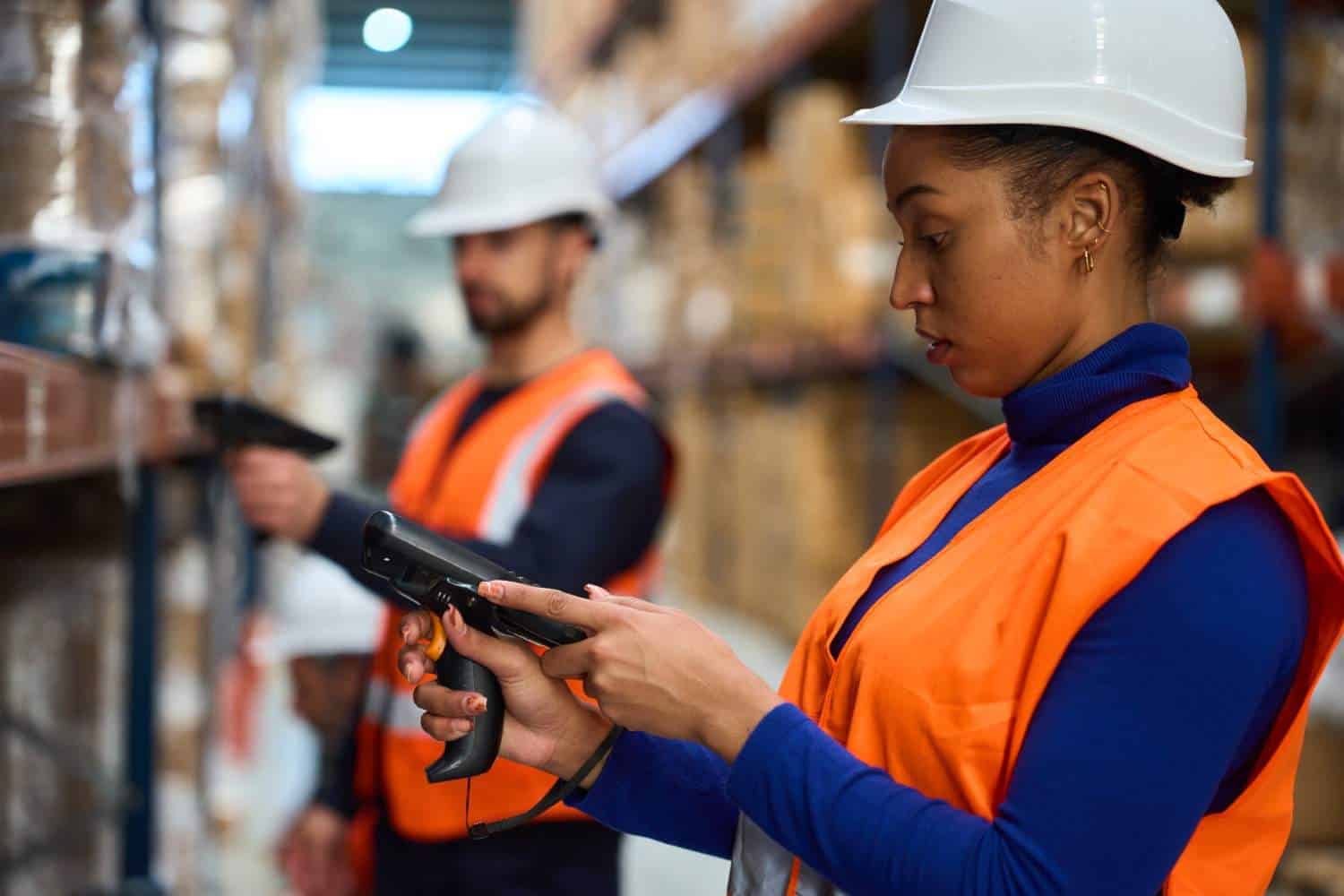
Mobile computers, barcode scanners, and rugged tablets change the daily rhythm of warehouse work in concrete ways. Workers get their instructions digitally. Picks get confirmed with a scan. Inventory discrepancies surface immediately rather than showing up three weeks later during a cycle count.
The practical results:
- Picking and packing move faster with digital workflows instead of paper
- Order accuracy improves because confirmation happens at the point of action
- Inventory visibility gets sharper in real time across the facility
- Less time gets wasted chasing information that should already be available
- Productivity goes up because workers spend time on the work, not the paperwork
A warehouse team with the right mobile tools spends less time looking for answers and more time moving products.
Improving Communication Across the Supply Chain
Communication problems cause more supply chain disruptions than most people realize. A supplier does not know that a shipment is delayed. A distribution center does not know a truck is running late. A customer service team has no visibility into why an order is sitting somewhere unexpected.
Mobile technology keeps everyone working from the same current picture. Updates travel instantly. Issues get flagged and resolved faster. Nobody is waiting on an email chain to find out what is actually happening.
Better communication leads to:
- Faster problem resolution before delays cascade downstream
- Stronger coordination between departments and partners
- More transparency across the whole fulfillment process
- Better supplier relationships built on shared, accurate information
- More reliable customer updates that reflect what is actually happening
When people stop playing telephone and start working from live data, a lot of the friction that slows supply chains down simply disappears.
Supporting Accurate Inventory Management
Inventory accuracy might be the single most important factor in supply chain performance. Get it wrong and everything downstream suffers: stockouts, overstock, delayed shipments, and customers who ordered something that turns out not to be there.
Mobile scanning and RFID tracking fix this by capturing inventory information at the moment it changes. The product comes in, and it gets scanned. Product moves; that movement gets recorded. The system reflects reality rather than what someone thinks reality might be based on yesterday’s data.
Organizations that get inventory right benefit from:
- Real-time stock visibility across every location
- Faster cycle counts that do not require shutting down operations
- Fewer discrepancies between physical stock and system records
- Better purchasing decisions based on accurate demand data
- Fewer stockout situations that disappoint customers and lose sales
Accurate inventory is not just an operational metric. It directly affects customer experience and the bottom line.
Empowering Frontline Employees
The people doing the physical work in a supply chain, picking orders, receiving product, loading trucks, conducting counts, are the ones who most directly benefit from mobile technology done right.
When workers have their task assignments, instructions, and inventory information on a device in their hands, they do not need to stop and ask a supervisor every time a question comes up. They can handle more situations independently, move faster, and spend their energy on the actual job rather than navigating around information gaps.
What that looks like in practice:
- Workers get instructions instantly rather than waiting for updated paperwork
- Routine questions get answered by the device instead of interrupting a supervisor
- Workflows get simpler because steps are guided and confirmed digitally
- Productivity improves across the board, not just for high performers
- Job satisfaction tends to rise when people have tools that actually help them
Giving frontline workers good tools is one of the most direct investments a business can make in operational performance.
Strengthening Transportation and Logistics Operations
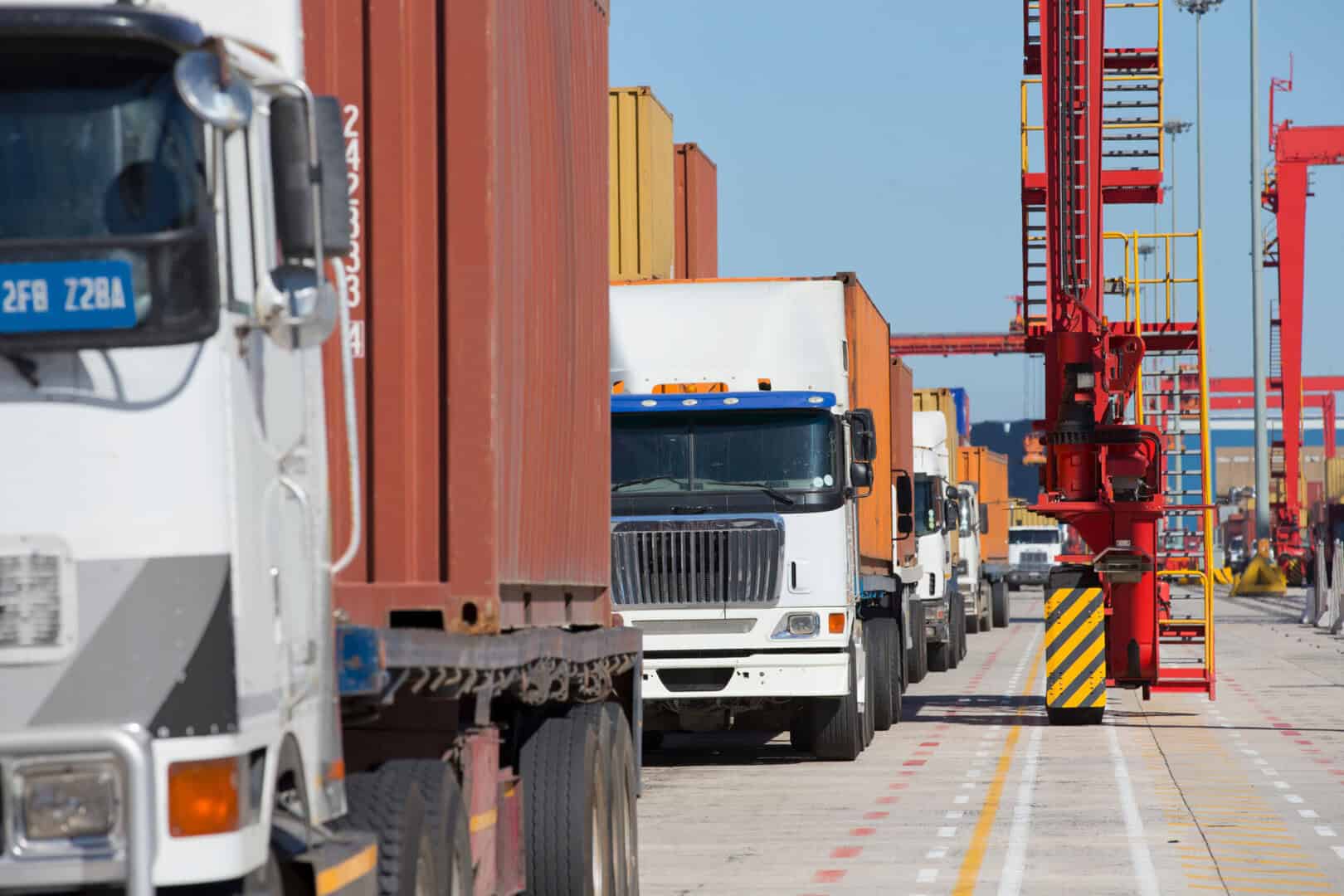
Once a shipment leaves the warehouse, visibility becomes harder to maintain, and customers start expecting updates more urgently. Mobile technology keeps that connection alive throughout the delivery process.
Drivers can confirm deliveries, capture signatures, flag issues, and send status updates directly from their devices. That information reaches dispatchers and customer service teams immediately rather than after a driver calls in at the end of a shift.
The advantages on the transportation side:
- Live shipment visibility for dispatchers and operations teams
- Faster proof-of-delivery processing without paper-based delays
- Quick issue reporting from drivers in the field
- Better communication with customers when something changes
- Less administrative burden on drivers and back-office staff
When transportation visibility improves, delivery commitments become more reliable, and exceptions get handled before they become customer complaints.
Improving Customer Experience
Everything that happens in a supply chain eventually affects the customer. Slow fulfillment, wrong items, late deliveries, and no visibility into where an order is; these things damage relationships and erode trust.
Mobile technology tightens up all the processes that feed into customer experience, order accuracy, fulfillment speed, inventory reliability, and communication throughout the process.
Customers end up with:
- Orders that arrive on time because operations are running efficiently
- Fewer errors because confirmation happens at every step
- Better shipment visibility because data flows in real time
- Faster responses when something does go wrong
- A more reliable overall experience that builds long-term loyalty
In competitive markets where customers have options, supply chain performance is often what separates businesses that retain customers from those that lose them.
Enabling Data-Driven Decision Making
Every scan, transaction, and workflow interaction generates data. Most of that data goes unused in operations that have not built systems to capture and analyze it.
Mobile platforms change that. Managers get visibility into how work is actually getting done, where time is being lost, which processes are running smoothly, and where inventory tends to pile up or go missing.
That information supports decisions around:
- Labor planning and productivity based on actual output data
- Inventory movement patterns that reveal stocking and replenishment opportunities
- Process bottlenecks that slow throughput and add cost
- Workflow improvements grounded in real operational behavior
- Strategic planning that reflects how the supply chain actually performs
Operating with real data is fundamentally different from operating on assumptions and experience alone.
Supporting Scalability and Growth
Growth creates operational complexity. More facilities, more inventory, more staff, more customers — and more chances for things to fall through the cracks if the infrastructure is not keeping up.
Mobile solutions scale with the business. Standardized workflows can be deployed across new locations quickly. New workers can be onboarded onto familiar processes. Visibility stays consistent regardless of how many sites are in the network.
That scalability supports:
- Multi-site operations managed from a consistent platform
- Workforce expansion without rebuilding training and processes from scratch
- Higher inventory volumes are handled with the same accuracy
- New distribution channels integrated without disrupting existing workflows
- Growth that does not create operational chaos
Businesses that build on scalable mobile infrastructure tend to handle growth more cleanly than those piecing things together as they go.
The Future of Mobile Supply Chain Management
RFID, IoT sensors, predictive analytics, cloud platforms — these technologies are already changing what supply chains can do, and they are all built on a foundation of connected, mobile-enabled operations. Organizations investing in mobility now are not just solving today’s problems. They are building the infrastructure that makes future innovation possible.
The supply chains that hold up best — through disruptions, growth spurts, shifting customer demands, and competitive pressure — tend to be the ones where people have good tools, information flows freely, and decisions get made on real data rather than guesswork.
Mobile technology is a big part of how that happens.

A Horizons Talent Alumnus and Microsoft Certified Systems Engineer (MCSE), the author brings a proven track record of success in senior shared-services leadership roles within large, complex multinational organizations, particularly in the manufacturing sector.
With deep experience at Senior Manager level, they have led strategic customer relationships by understanding core business imperatives, shaping service and solution propositions, and delivering measurable business outcomes.