Consumers’ confidence in the food they eat is eroding. In the last few years, FDA food recalls increased nearly 400%, largely thanks to salmonella and undeclared allergens1. Ghastly stories about contaminated foods causing illness and deaths across several states further diminish consumers’ confidence in food — and in the retailers where they purchased the recalled food products.
Both the United States government and the produce industry have taken notice of this critical situation. Their responses have resulted in the Food Safety Modernization Act, which includes the Bioterrorism Act and Country-of-Origin Labeling requirements of 2002, as well as the Produce Traceability Initiative. In addition, large and influential retailers are placing increased emphasis on consumer safety, and are mandating that all fresh produce delivered to their distribution centers follow the new industry standards for labels.
While the new government regulations and industry initiatives can be difficult to navigate, compliance is more important than ever. Beyond the risks of enormous financial fallout due to recalls, even the best produce is in jeopardy of being rejected by large retailers for failure to meet mandated labeling standards.
An effective traceability system is the foundational element of many of the new regulations and requirements. Without an efficient, accurate track-and-trace system, the negative impact of a potential recall is multiplied.Without precise product identification, unaffected produce could have to be destroyed, which further eats away at tumbling profits — and does nothing to help public safety or customer satisfaction.
In addition, slow execution and inaccurate tracking further delay the ability to determine the root cause of a food safety issue, which can also diminish customer confidence for the long-term.
Lowry Solutions understands the demands created by increasing food safety legislation and industry regulations, as well as the focus on consumer safety. We realize that you need cost-effective food traceability solutions that help you improve operational efficiency and get employees up to speed while also meeting current (and future) compliance. We provide fully customizable and integrated solutions and the complete line of industry-leading Honeywell products, including:
- Handheld computers
- Wearable voice computer
- Rugged mobile printers
- Fixed industrial printers
- Wired and wireless scanners
- RFID devices
- Cold storage media
Check out our quick video on Lowry’s Packaging Execution System — the ideal traceability solution for the Food & Beverage industry:
Beyond Compliance: The Long-Term Benefits of Food Traceability

Most companies get into food traceability because they have to. A regulation lands, an audit looms, and suddenly, traceability is on the priority list. That’s fine, but it’s a pretty limited way to think about what a good system actually does for you.
The businesses getting the most out of traceability aren’t treating it like a compliance exercise. They’re using it to run tighter operations, catch problems before they blow up, and give customers something real to hold onto when they’re deciding whether to trust a brand. That’s a different conversation entirely.
And the pressure from customers is genuine. People read labels now. They ask where things come from. They notice when a company is vague about its sourcing or handling practices, and they draw their own conclusions. Food manufacturers, processors, distributors, retailers, nobody in the chain is insulated from that scrutiny anymore.
End-to-End Visibility: Why It Actually Matters
Here’s the honest reality of most food supply chains: products touch a lot of hands before they reach anyone’s plate. Multiple suppliers, processing sites, transport legs, warehouses, and distribution centers. Each handoff is a point where information can get lost, mislabeled, or simply never recorded in the first place.
When something goes wrong, and eventually, something always does, trying to piece that journey together manually is painful. It takes time nobody has, and the picture you end up with is rarely complete.
A proper traceability system builds that record automatically, step by step:
- Where raw materials came from
- What happened during the receiving
- How products were processed and packaged
- Which quality checks were run
- How inventory moved through storage
- Where shipments went and when
That’s not just useful during a crisis. Day to day, it tells you where inefficiencies are hiding, where inventory is sitting longer than it should, and where a small issue is quietly becoming a bigger one.
Recalls: The Difference Between Targeted and Chaotic
Nobody wants to think too much about recalls. But they happen, and how a company handles one shapes how customers and partners see them for years afterward.
The old way of managing a recall was essentially: pull everything that might be affected and sort it out later. That approach is expensive, wastes perfectly good product, and still somehow manages to miss things.
With solid traceability in place, the response looks completely different. You can:
- Pin down exactly which lots or batches are actually involved
- See precisely where those products went
- Get the right people notified fast
- Pull only what needs to come off the shelves
- Protect everything else from getting caught up unnecessarily
That’s not just better for the business, it’s genuinely better for the people who might have bought a compromised product and are waiting to hear what’s happening.
Inventory Problems Are Quieter Than You Think
Inventory errors in food and beverage don’t always announce themselves loudly. They build up small discrepancies, slightly off stock counts, products sitting in the wrong location, until suddenly there’s a shortage nobody saw coming, or a write-off that hurts more than expected.
Manual tracking is where most of this starts. It’s slow, it’s inconsistent, and it relies on people entering the right information at the right time under real operational pressure. That combination rarely works perfectly for long.
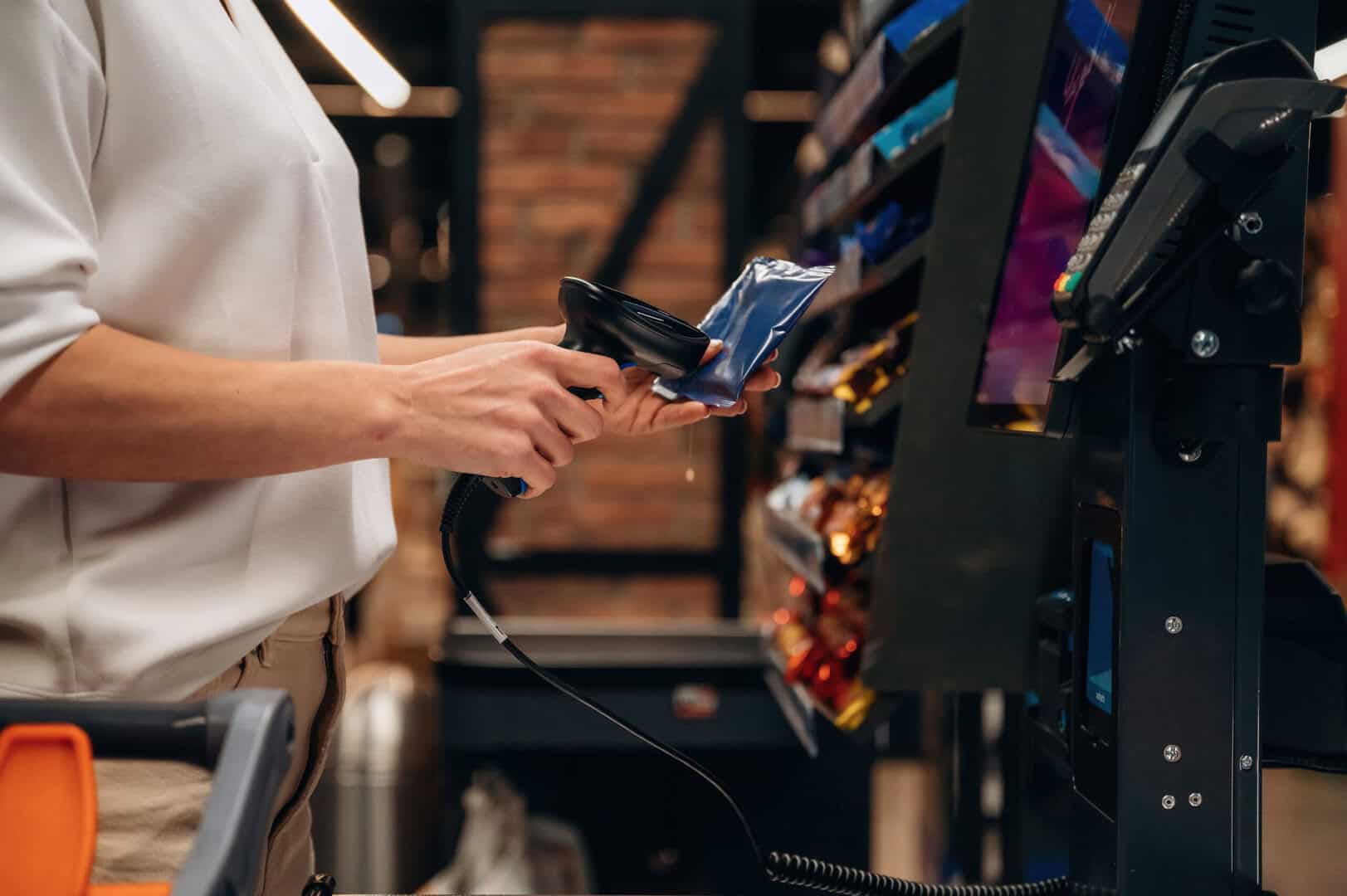
Automated traceability, barcode scanning, RFID, and mobile data capture take most of that risk off the table:
- Stock levels update in real time as products move
- Counts are faster and far more reliable
- Replenishment is based on what’s actually there, not what someone logged yesterday
- Waste from expiry or mismanagement drops noticeably
Tighter inventory isn’t glamorous. But it shows up clearly on the bottom line.
Getting Ahead of Safety Issues Instead of Chasing Them
Responding well to a food safety incident is important. Not having one in the first place is better.
Good traceability gives safety teams the kind of detailed records that make prevention realistic, not just aspirational. Storage conditions, processing timelines, temperature logs, supplier performance history, and quality checkpoints. That information sits there building a picture over time.
And pictures tell you things. A pattern of temperature variance from a particular cold storage unit. A supplier whose incoming quality has been slipping for three months. A processing step that keeps showing up in the data right before a quality flag gets raised.
Those aren’t things you catch by responding to incidents. They’re things you catch by actually watching what the data is telling you, and acting before it becomes a headline.
The Paperwork Nobody Enjoys
A lot of food businesses are still running on documentation processes that were designed for a different era. Paper logs, manual data entry, spreadsheets being emailed back and forth. It works, technically, but it eats time and introduces errors at every step.
Digital traceability handles a lot of that automatically:
- Product identification and data capture at each stage
- Label generation without manual input
- Inventory records that update themselves
- Shipping verification without the back-and-forth
- Compliance reports that don’t require someone spending a Friday afternoon pulling everything together
The time that frees up isn’t trivial. And the reduction in errors, particularly the kind that only surface during audits, is worth a lot on its own.
Your Supply Chain Partners Notice Too

Food safety is a shared responsibility. What a supplier does upstream affects what a manufacturer can guarantee. What a distributor does in transit affects what a retailer can stand behind. The whole chain is only as trustworthy as its weakest link.
Traceability creates a common record that all those parties can work from. That means:
- Supplier compliance can be verified, not assumed
- Incoming materials can be tracked against their claimed origins
- Performance issues show up in data before they turn into disputes
- Information that needs to move fast actually does
That transparency changes the dynamic in supplier relationships. Problems get raised earlier. Accountability sits where it should. And partners who know you’re tracking things carefully tend to be more careful themselves.
What Customers Are Actually Looking For
Brand trust in food is hard to build and genuinely easy to destroy. One recall, one viral story about mislabeling, one vague answer to a straightforward question about sourcing, and years of goodwill can evaporate fast.
Customers today aren’t just reading labels out of habit. They want to know:
- Where the product actually came from
- How ingredients were sourced and handled
- Whether sustainability claims are backed by anything real
- What quality assurance actually looks like in practice
Companies that can answer those questions clearly and honestly, not with marketing language, but with actual information, build the kind of loyalty that holds up. That’s the kind of customer who comes back, recommends the product, and gives you the benefit of the doubt when things aren’t perfect.
Regulations Will Keep Changing — That’s Just the Reality
Food safety standards don’t stay fixed. Governments tighten requirements. New categories get added. Reporting obligations expand. Companies that wait for regulations to change before updating their systems spend a lot of money and energy reacting, and usually end up behind anyway.
Building proper traceability infrastructure now means those changes land differently. New compliance standards get absorbed. Additional product lines get added without rebuilding from scratch. Emerging technologies plug into what’s already there rather than replacing it.
That’s a much better position to be operating from than scrambling every time a new requirement comes into force.
The Technology Behind It
Modern traceability doesn’t run on any single tool. The systems that work best bring several technologies together into one connected setup:
- Barcode scanning and RFID for real-time tracking
- Mobile computing for workers on the floor and in the field
- Industrial printing for accurate, consistent labeling
- Cloud-based reporting for visibility across locations
- Analytics dashboards that turn raw data into decisions
The point isn’t the technology itself; it’s what happens when it all works together. Data gets captured automatically. It flows to where it’s needed. And instead of sitting in a spreadsheet somewhere, it becomes something people can actually act on.
Operations That Hold Up Under Pressure
Supply chain disruptions aren’t rare events anymore. Labor shortages, logistics failures, regulatory shifts, and demand swings are just the conditions food businesses operate in now. The organizations that navigate them best aren’t the ones with the most resources. They’re the ones who can see what’s happening clearly and move quickly when they need to.
Traceability doesn’t make problems disappear. But it means you’re not finding out about them three weeks later. You catch things earlier, respond faster, and keep the operation running through disruptions that would otherwise cause serious damage.
At the end of it, food traceability is really about one thing: being able to stand behind your product at every step of its journey. That matters to regulators, yes. But it matters more to the person who picks it off a shelf and brings it home.
And make sure to browse our food traceability brochure from Intermec by Honeywell for more information on essential traceability hardware.
Got more questions? Contact Lowry Solutions today for a hands-on demonstration of our food traceability solutions and the latest Honeywell products.
1. Texas Food Safety Conference 2011 — SAGE Food Safety presentation: August 17, 2014

A Horizons Talent Alumnus and Microsoft Certified Systems Engineer (MCSE), the author brings a proven track record of success in senior shared-services leadership roles within large, complex multinational organizations, particularly in the manufacturing sector.
With deep experience at Senior Manager level, they have led strategic customer relationships by understanding core business imperatives, shaping service and solution propositions, and delivering measurable business outcomes.